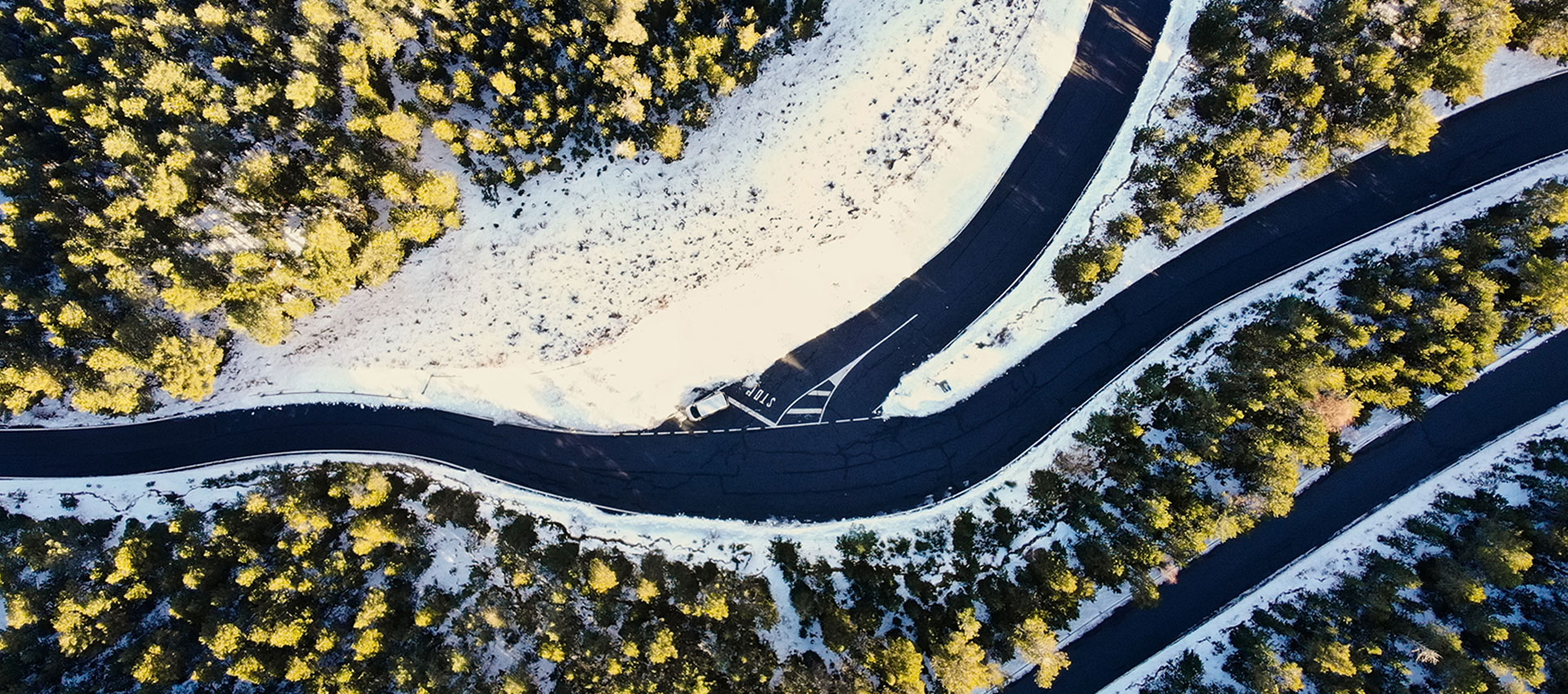
The principality of andorra, a country in the pyrenees rich in history and culture
Located between France and Spain, in the heart of the Pyrenees, the Principality of Andorra is easy to spot on a map provided, of course, that you know where to look. With its 468 km², this small mountainous state could almost go unnoticed. Yet its history, political organization and cultural identity make it a country unlike any other in Europe.
Andorra is not limited to its ski resorts or shops. The Principality has its own institutions, an official language, a long political history and a society shaped by exchanges with Catalonia, France, Spain and Portugal. Its territory is organized into seven parishes, and the mountains directly influence the way people live, travel and even develop the economy.
To understand Andorra, one must therefore look beyond its status as a microstate. Its system of co-principality, highly international population, Romanesque heritage, relationship with the Catalan language and economic development tell the story of a territory that has learned to preserve its identity while remaining widely open to the outside world.
Andorra at a glance
The Principality of Andorra is located in the eastern part of the Pyrenees, between France to the north and Spain to the south. Its territory is entirely mountainous. It is divided into seven parishes: Canillo, Encamp, Ordino, La Massana, Andorra la Vella, Sant Julià de Lòria and Escaldes-Engordany.

Andorra la Vella is the country’s capital and its main administrative and commercial center. Despite the Principality’s limited area, the different parishes have retained distinctive characteristics. Some are strongly oriented toward tourism and winter sports, while others remain more closely associated with mountain landscapes, heritage or residential life.
Andorra is a sovereign state recognized internationally. The country has notably been a member of the United Nations since 1993 and of the Council of Europe since 1994. It has its own institutions, conducts its foreign policy and maintains diplomatic relations with many states.
Its official language is Catalan. This is one of the most important features of Andorran identity. In everyday life, however, it is also common to hear Spanish, French or Portuguese. This linguistic diversity is largely explained by the international composition of the population. Andorra’s demographics have a particular feature: a significant proportion of the people living in the country do not hold Andorran nationality. The Spanish, Portuguese and French communities are particularly well represented. Exact figures change from one year to the next, so it is preferable to consult official statistics whenever precise demographic data are required.
Several symbols also help identify the national identity of this small state nestled in the heart of the Pyrenees. The flag combines blue, yellow and red and bears the Principality’s coat of arms. The national anthem, “El Gran Carlemany,” recalls Charlemagne’s place in Andorran historical tradition. As for the motto “Virtus Unita Fortior,” it may be translated as “United virtue is stronger” and refers to the idea of unity that runs throughout the country’s political history.
A history shaped by the mountains and neighboring powers
Human history in the Andorran valleys long predates the birth of the Principality. Evidence of settlements indicates an ancient human presence in this part of the Pyrenees. Charlemagne holds a special place in the national narrative. An old tradition attributes to him a role in the liberation or protection of the Andorran valleys during the early Middle Ages. However, it is important to distinguish this tradition from what can be established with certainty through historical sources. His importance is also symbolic, as shown by his presence in the national anthem.
The true development of Andorra’s political system took place within the power relations of the Middle Ages. The valleys then found themselves at the center of the interests of the Bishop of Urgell and lords connected to the County of Foix. The year 1278 marked a decisive moment. An agreement known as the “paréage” organized the division of feudal rights over Andorra. A second paréage supplemented this arrangement a few years later. These medieval agreements contain the roots of the co-principality that still characterizes Andorra’s institutions today.
Over the centuries, the holders of one of the co-princely rights changed. The prerogatives once associated with the Count of Foix eventually became attached to the head of the French state. The other co-prince remains the Bishop of Urgell, whose seat is located in Catalonia.
The system did not, however, remain unchanged since the Middle Ages. The institutions gradually evolved, particularly with the development of political representation and the reforms introduced during the nineteenth and twentieth centuries. The most important transformation of the modern era took place in 1993 with the adoption of the Andorran Constitution. It established Andorra as a democratic and social state governed by the rule of law and organized as a parliamentary co-principality. This Constitution defines the powers of the institutions and places the country’s operation within a modern democratic framework.
How does the co-principality of andorra work?

Andorra’s institutional system is probably one of the features that arouses the greatest curiosity. The Principality has two heads of state, known as co-princes. They are the President of the French Republic and the Bishop of Urgell. Their role is now defined within the framework established by the 1993 Constitution. Together, they represent the office of head of state and contribute to the institutional balance of the Principality.
It would nevertheless be misleading to imagine Andorra as a territory directly governed by France and Spain. The country has its own parliament, government, courts and administrations.
Legislative power is exercised by the Consell General, or General Council, the Principality’s unicameral parliament. Its members are elected by universal suffrage. The General Council notably examines and adopts laws as well as the state budget. Executive power belongs to the Government of Andorra, headed by the head of government. The latter leads national policy and supervises the administration. The office of syndic general is also important in institutional life. The syndic presides over the General Council and organizes its work.
This structure allows Andorra to preserve an institution directly inherited from its medieval history while operating according to the principles of a contemporary parliamentary democracy. It is precisely this coexistence between historical heritage and modern institutions that makes the Andorran system so distinctive.
An economy long driven by tourism and trade
Andorra’s geography imposes obvious constraints. Available land is limited, the terrain is rugged, and the country has neither access to the sea nor major industrial resources. The Principality has therefore developed an economic model suited to its situation.
Tourism plays a central role. In winter, the ski areas attract visitors, particularly from France and Spain. Once the snow disappears, hiking, cycling, mountain biking and outdoor activities take over. This ability to welcome visitors during several seasons has become one of the main drivers of economic activity.
Trade also has a long-standing role in the local economy. Andorra’s tax system, which is relatively lower than that of several European countries, has long helped attract visitors. It is nevertheless more accurate to describe it as a specific and moderate tax system than to portray Andorra as a territory where all purchases are simply “tax-free.”
The financial sector represents another important part of the economy. Andorra’s banking model has changed considerably over the past several decades. The Principality has strengthened its regulatory framework and its international cooperation in tax and financial matters. The traditional image of Andorra as a simple haven based on banking secrecy therefore increasingly fails to reflect its current operations.
Taxation nevertheless remains one of the factors considered by individuals and companies planning to settle in the country. Andorra has notably maintained very low tax rates by European standards, whether concerning personal income tax or corporate income tax.
However, taxation should not be considered in isolation. Establishing oneself or investing in Andorra requires compliance with residency conditions, administrative rules and, depending on the project, regulations concerning foreign investment. As the rules may change, any asset-management or tax decision should be verified with the relevant authorities or a qualified professional.
At the same time, the Principality is seeking to diversify its economy. Digital activities, innovation, entrepreneurship, sport, healthcare and certain high-value-added services are among the areas regularly highlighted in development strategies. This diversification responds to a very real challenge: reducing the country’s dependence on tourism, trade and the economic fluctuations of its neighbors.
Living in andorra: a much more international society than one might imagine

One of the most striking aspects of Andorran society is its cosmopolitan character. The presence of residents from Spain, France and Portugal can be seen in shops, companies, schools and everyday conversations alike. Catalan remains the official language and occupies a central position in institutions, but multilingualism is an integral part of the country’s reality.
This diversity is also visible in education. Families living in Andorra can choose among several educational systems, notably Andorran, French and Spanish. This arrangement is quite unusual on a European scale and directly reflects the country’s history and geographical situation. The University of Andorra completes this higher-education offering, although many students also pursue their studies in neighboring countries.
Healthcare is based on a social-protection system to which employees, employers and self-employed workers contribute. The Caixa Andorrana de Seguretat Social, generally referred to by the acronym CASS, plays an essential role in this system. For medical care that cannot be provided locally, Andorra’s proximity to France and Spain also makes it possible to rely on facilities located across the borders. This cross-border system is an important reality to understand when considering living permanently in the Principality.
Daily life is naturally influenced by the mountains. Skiing, hiking, cycling, mountain biking and outdoor activities are particularly accessible. But living in Andorra does not mean spending one’s days on the slopes. The more urbanized areas, particularly around Andorra la Vella and Escaldes-Engordany, offer a much more urban lifestyle, with shops, restaurants, schools, sports facilities and public services.
The country’s small size reduces distances, but it also creates certain constraints. Traffic can become heavy during rush hours or periods of intense tourist activity. Housing is also an important issue for residents, particularly in areas where demand is high. In other words, the image of an entirely peaceful life in a mountain village reflects only part of the reality of Andorra.
A culture deeply connected to the catalan world
Andorran culture is inseparable from the Catalan language and the history of the Pyrenees. Catalan is used in institutions and public administration and occupies an important place in education and cultural life. It is an essential element of national identity, all the more remarkable because Andorra is the only sovereign state in which it is the official language.
This identity is also expressed through local festivals. Each parish has its own calendar of celebrations. Music, communal meals, performances and popular traditions bring residents together and help pass on part of the local culture. Celebrations involving fire around the summer solstice are also part of the Pyrenean heritage. The Falles, in particular, are a tradition shared with other areas of the Pyrenees and recognized as part of UNESCO’s Intangible Cultural Heritage.
The cuisine tells the same story of territory and influences. Catalan cuisine, mountain traditions and French contributions meet on the plate. Escudella, a hearty dish made with broth, vegetables and meat, is one of the most emblematic foods. Trinxat, prepared notably with potatoes and cabbage, also belongs to this simple and nourishing mountain cuisine. To discover this cuisine in a traditional setting, one often encounters the term “borda.” Originally, these rural buildings were used for agricultural activities and livestock farming. Some former bordes have now been converted into restaurants while preserving the characteristic architecture of the Pyrenean valleys.
A particularly rich romanesque heritage
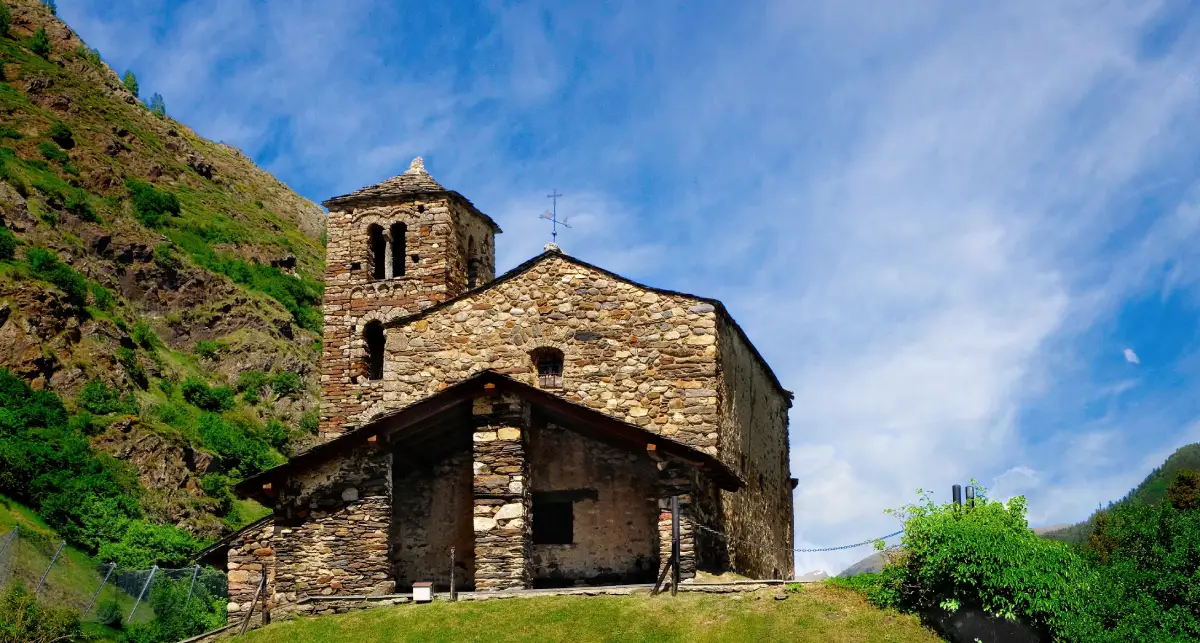
Andorra’s religious and rural history has left behind remarkable architectural heritage, particularly through its numerous Romanesque churches.
Sant Joan de Caselles, near Canillo, is one of the best-known buildings. The Church of Santa Coloma, easily recognizable by its circular bell tower, is another major example of the Principality’s medieval heritage.
There are also traditional houses and several museums devoted to Andorran life. The Casa d’Areny-Plandolit, in Ordino, for example, offers an insight into the everyday life of an important family in the country’s history.
The Casa de la Vall has a different significance. Built at the end of the sixteenth century, it housed the General Council for many years and remains one of the emblematic buildings of Andorra’s political history.
These sites help visitors understand an Andorra very different from the contemporary image of ski resorts and shopping avenues.
What to see and do in andorra
Winter sports are, of course, one of the main reasons to visit the Principality. Grandvalira is the country’s largest ski area and extends across several sectors. Pal Arinsal and Ordino Arcalís complete the range of snow-sports facilities. Depending on one’s level, accommodation and preferred atmosphere, the choice of sector can therefore be genuinely important.
But reducing Andorra to skiing would mean missing out on much of its appeal. When the warmer days return, the mountain landscapes become particularly suitable for hiking. The Madriu-Perafita-Claror Valley is a must-see in this respect. Listed as a cultural landscape on UNESCO’s World Heritage List, it offers valuable insight into the longstanding relationship between local inhabitants and their mountain environment. Cycling enthusiasts are also well acquainted with the Principality. Its mountain passes and high-altitude roads regularly host professional competitions, while mountain biking is playing an increasingly important role in the summer tourism offering.
For a more cultural discovery, it is worthwhile to combine several Romanesque churches, the Casa de la Vall, the historic districts and the country’s museums. The relatively short distances make it easy to combine heritage and outdoor activities during the same trip.
Andorra la Vella and Escaldes-Engordany concentrate a large part of the country’s commercial activity. Escaldes-Engordany is also home to Caldea, a vast thermal spa complex that has become one of the country’s best-known attractions.

What is the best time to visit andorra?
The best time mainly depends on what you want to do.
Winter is naturally suited to skiing and other snow-related activities. Exact conditions vary from year to year and according to altitude, making it useful to check the status of the ski area before traveling.
For hiking, cycling and discovering the landscapes, the period from late spring to early autumn is generally more suitable. Summer also offers the opportunity to enjoy numerous events organized in the different parishes.
Spring and autumn can provide a quieter atmosphere, but some tourist facilities or mountain trails may operate differently depending on the season.
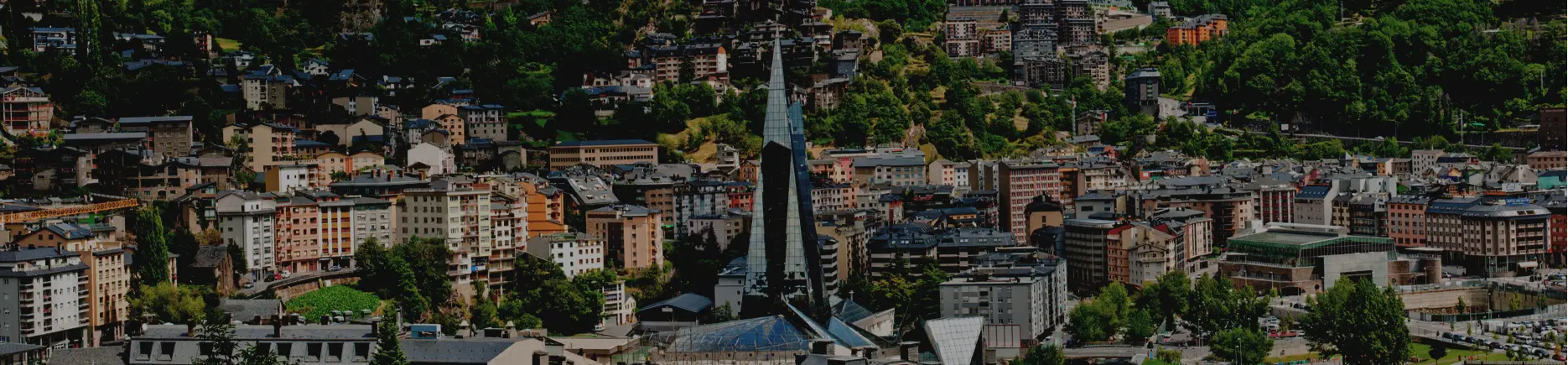
How to get to andorra
Andorra has neither an international airport within its territory nor a railway station directly connected to the European rail network. Arrival is therefore mainly by road from France or Spain.
For travelers coming from farther away, Barcelona and Toulouse are among the main arrival points before continuing to the Principality by car, coach or transfer service. Other regional airports may also be used depending on the departure point.
This feature should be taken into account when planning a trip. A distance that appears short on a map may require more time in the mountains, particularly when weather conditions, snow or heavy traffic slow down travel.
Entry requirements also depend on the traveler’s nationality and itinerary. Since Andorra is neither a member of the European Union nor part of the Schengen Area, it is preferable to verify the necessary documents with the relevant authorities before departure rather than relying solely on the rules applicable to France or Spain.

Where to stay and how to get around
The range of accommodation is particularly varied for a country of this size. There are luxury hotels, family-run establishments, tourist apartments and accommodation options more specifically geared toward sports-oriented stays.
The location of one’s accommodation should be chosen according to the planned itinerary. A stay devoted mainly to skiing involves different requirements from a weekend focused on shopping, thermal spas or cultural discovery.
The bus network connects the different parishes and can be convenient for avoiding certain car journeys. To reach more isolated hiking trailheads or visit several valleys, however, having a vehicle can provide greater flexibility.
As in many mountainous regions, travel times can vary considerably depending on the weather, road conditions and traffic levels. This is particularly true during ski weekends and holiday periods.
Why Andorra deserves to be discovered in a different way
Andorra is often described through a few simple images: skiing, shopping, banks and favorable taxation. These factors have indeed played, or continue to play, a role in its economy, but they are not enough to represent the country.
The Principality is above all the result of an exceptionally long political history. Its current institutional organization preserves traces of medieval agreements while operating within a modern parliamentary democracy. Its official language asserts its cultural belonging to the Catalan world, while its population reflects a strong international openness.


On the ground, this duality is particularly visible. A few kilometers may separate a busy shopping avenue from a protected valley, a modern ski resort from a Romanesque church, or a contemporary thermal spa from an old rural building.
This coexistence is probably what makes Andorra so interesting. The Principality corresponds neither entirely to the image of a small Pyrenean village nor to that of a simple shopping destination. It combines both, with its own institutions, traditions and the very real constraints of a mountainous territory that continues to evolve.
When preparing a trip, a relocation project or an administrative procedure, information that is likely to change—such as taxation, residency requirements, demographic statistics, transportation, access to ski areas and entry formalities should always be verified with the relevant official organizations. This precaution makes it possible to distinguish Andorra’s enduring characteristics from practical information that may change from one year to the next.
L’Andorre n’a plus aucun secret pour vous
Découvrez tout ce qu’il faut savoir sur la Principauté d’Andorre, son histoire, sa culture et son organisation !

Best tips residents
The Principality of Andorra is famous for its lower taxation, ski resorts and mountain landscapes. But once you settle in the country, it is often much more practical considerations that make the biggest difference, such as getting around without unnecessary...
Discover
In Andorra, talking about infrastructure does not simply mean talking about roads, tunnels, or public buildings. In this small mountainous territory located between France and Spain, the way people travel, connect to the Internet, access healthcare, or even...
Discover
Getting around Andorra requires a little more planning than travelling to a destination served by rail or a major airport. The reason is simple: located in the heart of the Pyrenees, the Principality relies mainly on its road network. Cars and buses are the...
Discover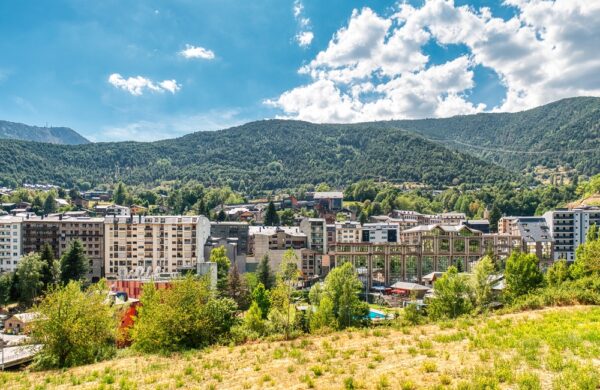
In Andorra, there are no departments, provinces or regions. The country is divided into seven parishes: Canillo, Encamp, Ordino, La Massana, Andorra la Vella, Sant Julià de Lòria and Escaldes-Engordany. This organisation can be surprising when first...
Discover
Andorra is often associated with skiing, shopping and short getaways in the Pyrenees. Yet reducing the Principality to these three aspects would mean missing much of what makes it interesting. Within a relatively compact territory, you can discover Romanesque...
Discover
History of the country
Nestled in the heart of the Pyrenees, between France and Spain, Andorra is a country readily associated with its mountains, ski resorts, or shops. Yet behind this small territory lies a particularly distinctive political history. The Principality has passed...
Discover