What language is spoken in Andorra? History, usage and the role of Catalan
In Andorra, the answer seems simple: Catalan is the country's only official language. In everyday life, however, the reality is much richer. Spanish, French and Portuguese are also part of the Principality's soundscape, to the point that it is perfectly common to switch from one language to another depending on who you are speaking to. This situation is not anecdotal. Nestled in the Pyrenees between France and Spain, Andorra has been shaped by contact with several cultures. Its history, successive waves of migration and the importance of tourism largely explain this multilingualism. To understand which language is really spoken in Andorra, one must distinguish the official language, used by institutions and protected by the State, from the languages commonly used by residents.
What is the official language of Andorra?
The official language of Andorra is Catalan. Its status is enshrined in the Andorran Constitution of 1993, which makes it the State's reference language.
Catalan is thus present in administration, political institutions, the judiciary and much of education. It also appears on official documents, signage and communications from public bodies. This institutional role is particularly important for Andorra.
The Principality lies between two major countries, France and Spain, and has long welcomed a population of diverse origins. Catalan is both a common language and one of the main markers of national identity. This does not mean, however, that everyday conversations take place exclusively in Catalan.
In shops, restaurants, businesses or simply in the street, hearing Spanish, French or Portuguese is perfectly normal. In other words, if you are wondering which language is spoken in Andorra, remember two things: Catalan is the official language, but Andorran society is deeply multilingual.
Why is Catalan spoken in Andorra?
The presence of Catalan in Andorra long predates the country's modern Constitution. It is rooted in the history of the Pyrenees and neighbouring Catalan-speaking territories.
Derived from vulgar Latin, Catalan developed progressively in the Middle Ages in this part of Europe. The geographical situation of the Andorran valleys naturally favoured exchanges with Catalan-speaking regions to the south. For centuries, this language was an element of cultural continuity for a small principality surrounded by much larger territories.
Catalan is therefore not an official language chosen recently for administrative reasons. It belongs to the country's history and to the construction of its identity. The Andorran linguistic landscape nevertheless changed considerably in the twentieth century.
The country's economic development attracted many new residents, notably from Spain, Portugal and France. Spanish and Portuguese thus took an important place in daily exchanges, while French remained very present because of geographical proximity and relations with France. The Constitution of 1993 legally enshrined Catalan as the official language.
Since then, the country's language policy has sought to maintain its use while adapting to a particularly international population.
What are the most widely spoken languages in Andorra?
Catalan holds first place institutionally, but it shares residents' daily lives with several other languages.
Spanish is particularly widespread. Proximity to Spain, migration and economic exchanges explain its strong presence.
In Andorra la Vella or Escaldes-Engordany, it is common to hear it in shops, restaurants and private conversations. Portuguese is also well established, due to the significant community of Portuguese origin that has settled in the Principality over the decades.
French enjoys a particular position. France shares a border with Andorra and has its own school network in the Principality.
The language is also useful in tourism, trade and exchanges with French visitors. Finally, English is increasingly useful in sectors oriented towards international audiences, notably tourism and hospitality, without having the same historical roots as Catalan, Spanish, French or Portuguese.
Exact usage proportions vary according to surveys, years and, above all, how the question is asked: mother tongue, habitual language, language spoken at home or language used at work do not necessarily yield the same results. It is more relevant to consider Andorra as a society where several languages coexist than to assign each a fixed percentage without specifying the source and methodology.
Les proportions exactes d’usage varient selon les enquêtes, les années et surtout la manière dont la question est posée : langue maternelle, langue habituelle, langue parlée à la maison ou langue utilisée au travail ne donnent pas nécessairement les mêmes résultats. Il est plus pertinent de considérer l’Andorre comme une société où plusieurs langues coexistent plutôt que d'attribuer à chacune un pourcentage figé sans préciser la source et la méthodologie.
Is Catalan really used in everyday life?
Yes. Catalan is not merely an administrative or symbolic language.
It is used in many everyday situations and remains particularly visible in public space. Its importance nevertheless depends on context. A person may use Catalan to complete an administrative procedure, speak Spanish with certain colleagues, use French with visitors and then return to Catalan in another setting.
This ability to switch naturally between languages is one of the characteristics of Andorran society. For a visitor, it can give the impression that several languages have the same status. Legally, however, this is not the case.
Only Catalan is the official language of Andorra. This distinction between official status and actual usage is essential to understanding the country's linguistic situation.
What language is spoken in Andorran schools?
The education system is probably one of the best illustrations of Andorran multilingualism.
The Principality has a fairly rare particularity: several school systems coexist there, notably Andorran, French and Spanish. In the Andorran system, Catalan naturally plays a major role.
Pupils are nevertheless exposed to several languages during their schooling, which reflects the country's geographical and social reality. The French system follows French programmes, while schools in the Spanish system logically give an important place to Spanish.
Catalan continues to be taught because of its status and its importance in local society. For children arriving from abroad, learning Catalan is also a way to facilitate their integration.
At school as in social life, mastering it makes it easier to participate in the life of the Principality without forcing families to give up the other languages they use. This coexistence explains why many young people growing up in Andorra develop real fluency in several languages very early on.
Cette coexistence explique pourquoi de nombreux jeunes grandissant en Andorre développent très tôt une réelle aisance dans plusieurs langues.
Do you need to speak Catalan to live in Andorra?
It is possible to communicate in many situations in Spanish or French, especially in sectors heavily frequented by visitors. But for someone who wishes to settle in Andorra on a long-term basis, learning Catalan is genuinely worthwhile.
It facilitates relations with administrations, access to certain professional activities and, more broadly, integration into local life. Andorran language policy does not consist solely of imposing the presence of Catalan in public space. It also seeks to encourage new residents to learn it.
Training schemes allow people who move to the country to progress in the official language. For a foreign resident, speaking Catalan is more than a practical skill. It is also a way to better understand the culture and society of the country in which they live.
How does Andorra protect Catalan?
Protecting Catalan is a genuine national issue. Andorra has a significant foreign population and receives a considerable number of visitors each year.
Without a specific language policy, a language spoken in such a small territory could gradually lose ground to international languages with far more speakers. The State regulates the use of Catalan in institutions and in various aspects of public life. Language legislation aims in particular to ensure its visibility and effective use.
This policy responds to a delicate balance. The goal is not to deny the multilingual character of Andorran society, which is part of the country's reality, but to prevent this diversity from marginalising its historical language. A recent law, Law 6/2024 of 25 April on the own and official language, also imposes a minimum level of Catalan to obtain or renew residence permits.
A first renewal requires, among other things, level A1. In the event of failure, applicants must complete 30 hours of Catalan courses at an official centre in the country.
What role do languages play in the media and culture?
Catalan enjoys a significant presence in Andorran media and local cultural production.
Press, radio, television and digital media help maintain a living language, used to discuss politics as well as sport, culture or everyday life. Proximity to France and Spain also gives residents natural access to many foreign media.
A person living in Andorra can consult content in Catalan, watch a Spanish channel and read a French publication in the course of the same day. This plurality is also reflected in culture.
Artistic events and activities organised in the Principality welcome audiences with varied linguistic profiles. Catalan retains a strong identity function, while other languages contribute to the country's cultural openness.
Why is Andorra so multilingual?
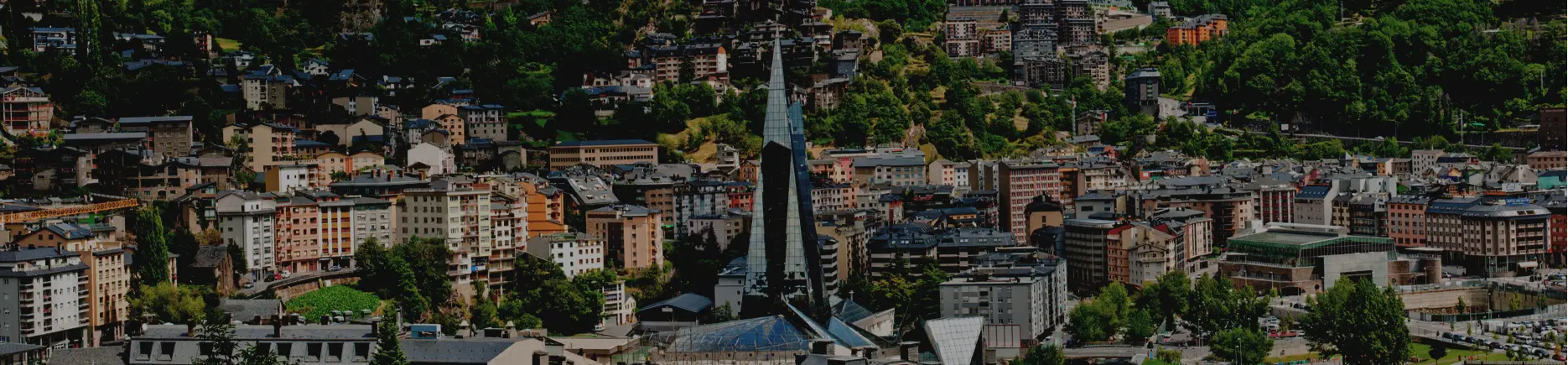
Geography provides much of the answer. Andorra lies between France and Spain, in an area where cross-border exchanges are constant. This is compounded by several decades of immigration and an economy that is heavily oriented towards foreign visitors.
In a hotel, restaurant or shop in Andorra la Vella, being able to communicate in several languages is a very practical advantage. A professional may have to assist Catalan-, Spanish-, French- and English-speaking customers one after another.
Andorran multilingualism is therefore neither a folkloric curiosity nor simply a consequence of tourism. It is the result of the country’s demographic, economic and geographical history. This situation nevertheless creates a challenge: ensuring that there are enough opportunities to use Catalan so that it remains a language that is genuinely spoken and passed on, rather than merely an institutional symbol.
Can you visit Andorra without speaking Catalan?
Yes. For a tourist stay, not speaking Catalan is generally not a major obstacle. Spanish is widely understood and French is frequently used, particularly with visitors from France. In hotels, ski resorts, restaurants and tourist-oriented shops, it is also common to find staff who can communicate in English.
Knowing a few words of Catalan is nevertheless a welcome gesture and can help visitors connect more closely with the local culture. Simple expressions such as bon dia for “hello” or gràcies for “thank you” are already enough to acknowledge the country’s distinctive linguistic identity.
Catalan, Spanish or French: which language should you learn?
If you only learn one, choose Catalan. It is the only official language of the Principality of Andorra and an essential part of its identity.
But reducing Andorra to Catalan alone would give an incomplete picture of the country. Spanish is widely spoken in everyday life. French retains a particular importance thanks to France’s proximity. Portuguese reflects several decades of immigration. English now complements this linguistic landscape in international and tourism-related activities.
Ultimately, this contrast best characterises the principality. Andorra has a clearly established official language while living with several languages on a daily basis. Catalan gives the country its linguistic identity. Multilingualism reflects its history, its population and its openness to its European neighbours.