
Moving to Andorra as a musician: benefits, taxation and procedures
Moving to Andorra as a musician can be attractive for several reasons: relatively moderate taxation, a peaceful environment, immediate proximity to France and Spain, and a quality of life that suits professionals with international activities. However, relocating abroad is never simply a matter of comparing tax rates. For an artist, the situation can quickly become complex when income comes from several countries, royalties, concerts, streaming platforms, or a production company.
Before moving, it remains essential to consider the project as a whole: residency, taxation, professional activity, housing, social security, and tour management. Here is some information that musicians should genuinely consider before choosing Andorra as their new place of residence.
Benefits of moving to Andorra for certain musicians and artists
Taxation is naturally one of the first arguments mentioned when discussing relocation to Andorra. Personal income tax is capped at 10%, which can represent a significant difference compared with several European countries. However, this does not mean that a musician living in Andorra will automatically pay 10% on all of their worldwide income. The nature of the income, its country of origin, applicable tax treaties, the artist's actual tax residence, and the way their business is structured can significantly affect the final outcome.
A composer who primarily receives royalties is not necessarily in the same situation as a DJ performing fifty dates a year across several European countries. Likewise, a self-employed musician, an employee, a company director, and an artist receiving international royalties may be subject to different tax treatments.
The appeal of Andorra therefore lies less in the promise of minimal taxation and more in the possibility of establishing a relatively clear tax framework when the move is genuine and properly structured. Added to this is a distinctive living environment. Andorra is a small mountainous territory, with short travel distances, close access to nature, and a pace of life that is generally very different from that of Paris, Barcelona, or Madrid.
For an author, composer, or producer who regularly works from home or a studio, this peaceful environment can be genuinely valuable. Being able to work for several days without the constraints of a major metropolitan area, while remaining relatively close to major European cultural centres, can offer an interesting compromise.
A convenient location for continuing to work in France and Spain
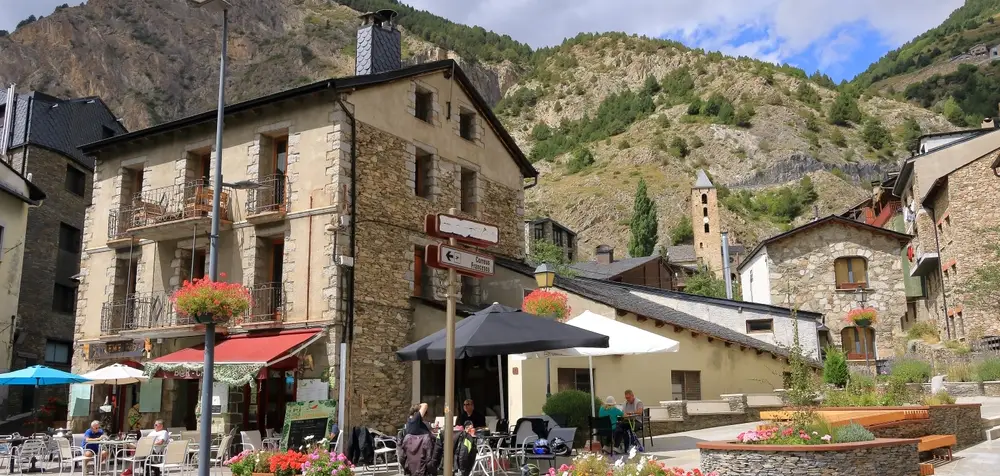
Living in Andorra does not necessarily mean cutting ties with the main European music markets. The principality is located between France and Spain. Barcelona and Toulouse remain accessible by road, making it possible to maintain professional collaborations, studio sessions, meetings with producers, or concert dates in neighbouring countries. This location is particularly suitable for artists whose work can largely be carried out remotely but who still need to travel regularly.
However, one very practical reality needs to be taken into account: Andorra has neither an international airport nor a railway network. Travel mainly involves using the road before reaching an airport or railway station. For an artist who travels several times a week, this detail can have a significant impact on organisation. For a composer or producer who only travels a few times a month, it will generally be much less restrictive. The right choice therefore depends directly on each person's professional schedule.
A living environment that can encourage creativity
Some musicians seek out large cities precisely because of their energy, constant opportunities to meet people, and abundance of studios, venues, and industry professionals. Others work better in a quieter environment. Andorra is more suited to the latter profile. The territory provides quick access to the mountains, outdoor activities, and less densely populated areas than major European capitals. For someone who composes, writes, produces, or spends long periods working in a studio, this environment can help foster concentration.
The country's small size can also appeal to well-known artists looking for greater privacy in their daily lives. However, it is important to remain realistic: Andorra does not have a music ecosystem comparable to that of Paris, London, Madrid, or Barcelona. An artist who relies heavily on constant networking, record labels, studios, or local venues will probably still need to work abroad regularly. This is precisely why Andorra is often better suited as a home base than as an artist's sole professional market.
Which type of residency should a musician choose?
Choosing the appropriate residency status is one of the most important decisions in the process. There are different forms of residency in Andorra, and the applicable requirements depend in particular on the professional activity carried out, how income is generated, and the artist's actual plans. A musician wishing to directly conduct an economic activity in the principality is not necessarily in the same situation as an artist whose income is primarily international and who is seeking residency without local salaried employment.
This is why it is preferable not to focus on which residency is the most advantageous, but rather to analyse the actual nature of the activity. Where does the income come from? Where do concerts take place? Who pays the royalties? Does the artist own a company? Do they work alone or with employees? Do they spend most of the year in Andorra, or do they continue to travel almost constantly? The answers to these questions can then be used to determine the appropriate status.
Residency requirements and the amounts involved may change over time. Verification with the Andorran authorities or a specialised professional therefore remains essential before preparing an application.

Preparing your relocation application
Preparing for a successful move abroad generally begins several months before the relocation. The authorities may request various documents to establish the applicant's identity, confirm the absence of convictions that could prevent residency, demonstrate their financial situation, and verify the genuine nature of their plans to settle in the country.
For a musician, it is also useful to prepare a clear professional file. Contracts, royalty statements, invoices for services, concert contracts, documents from a distributor or record label, and proof of income can help provide a clear overview of how the business operates.
This preparation is not only useful for administrative purposes. It also makes the work of a lawyer, Gestoria, or tax adviser responsible for assessing the situation easier. In an international artistic career, proper documentation can prevent many misunderstandings. Documents issued abroad may also need to be apostilled, legalised, or translated depending on their nature and country of issue. These requirements should be checked on a case-by-case basis.
Gestoria, lawyer or tax adviser: who can assist an artist?
The Andorran administrative system is accessible, but when a case involves multiple sources of international income, it can become technically complex. A Gestoria can assist with routine administrative procedures, setting up a business structure, and certain local formalities.
When the matter involves tax residency, international royalties, a company, or income from several countries, the involvement of a tax specialist or lawyer experienced in cross-border situations can become much more important. The key is to work with a professional who genuinely understands the business model of artists.
Music-related income is rarely as straightforward as a monthly salary. The same artist may receive concert fees, streaming royalties, copyright income, advertising revenue, label advances, merchandising income, or dividends from a company. Each category must be correctly identified before considering any tax optimisation strategy.
Taxation for musicians in Andorra: what you really need to understand
Andorra applies personal income tax at a maximum rate of 10%. Corporate income tax generally has a nominal rate of 10%, while the standard IGI rate, Andorra's indirect tax comparable to VAT, is 4.5%. These figures explain part of the country's appeal. However, they are not enough to determine the actual tax burden of an international musician.
Consider a simple example. A composer living in Andorra may receive royalties from works exploited in France, Spain, the United States, or through various digital platforms. Depending on the nature of this income and the applicable rules, withholding tax may sometimes be applied in the country of origin. The final calculation then depends, among other things, on tax treaties and mechanisms designed to prevent double taxation.
The same principle applies to concerts. A DJ residing in Andorra but regularly performing in France, Spain, Germany, or Belgium may be subject to the tax rules applicable to non-resident artists in each of those countries.
Being tax resident in Andorra does not automatically eliminate all foreign tax obligations. This is one of the points that deserves the most attention before relocating.
Setting up a music company in Andorra
Some artists choose to manage their activities through a company. An Andorran company can, in particular, be used for certain production activities, services, project management, or commercial exploitation. This can simplify the organisation of an artist's business when they generate significant income and incur numerous professional expenses.
However, setting up a company simply because the corporate tax rate is attractive would be an overly simplistic approach. It is necessary to consider the director's remuneration, any potential dividend distributions, accounting obligations, the company's economic substance, where business decisions are actually made, and the tax treatment in the different countries where the business operates. A company should serve a genuine economic purpose.
For an artist at the beginning of their career who performs a few concerts a month, it may create unnecessary complexity. For a producer who employs several people, finances projects, and invoices clients in different countries, it may, on the other hand, become a relevant option.
Copyright and international income

Copyright income is probably one of the most sensitive issues for a musician considering moving abroad. A songwriter or composer may receive income from collecting societies, publishers, record labels, digital distributors, or directly from foreign partners. These sources of income should not be treated as a single category. Their tax treatment can vary depending on their legal nature and the country from which they are paid.
It would be unwise to claim that an artist living in Andorra will automatically benefit from an exemption on foreign copyright income. The right approach is to create a detailed map of all income sources before moving: who pays, from which country, under what contractual arrangement, and for what type of rights. Once this map has been established, it becomes much easier to anticipate potential withholding taxes and reporting obligations.
Beware of your actual tax residency
Changing your address is not always enough to change your tax residency. For a move to Andorra to be consistent, it must reflect a genuine personal and economic reality. The number of days spent in each country is an important factor, but it is not necessarily the only criterion considered when a tax authority seeks to determine a person's actual tax residence.
The usual place of residence, family ties, centre of economic interests, and location of certain activities may also be taken into account depending on the circumstances. This issue becomes particularly sensitive for musicians who spend a large part of the year touring. An artist may own a home in Andorra while travelling for eight months a year. In this type of situation, keeping an accurate travel calendar and retaining relevant supporting documents is a useful precaution.
When significant ties remain with the country of origin, a tax assessment before departure can also help identify potential risks.
The Andorran music scene
Despite the territory's small size, Andorra has an active cultural scene. Concerts, festivals, and events are organised throughout the year, with programmes ranging from classical music to contemporary genres.
The Andorra Sax Fest is notably one of the recognised events centred around the saxophone, while various municipalities organise musical and cultural events at different times of the year.
For a musician who has just moved to the country, taking part in this local cultural scene is probably the most natural way to build connections. In a small country, professional networks tend to be more concentrated. A few encounters can quickly lead to connections with other musicians, promoters, teachers, or event organisers.
However, the Andorran market should not be viewed as a substitute for the major European music scenes. The number of residents and performance venues is naturally limited. A professional musician will often benefit from combining a local presence with an international career.
Teaching music in Andorra
Teaching can be an interesting additional activity for some artists.
The country has institutions dedicated to music education and practice. Depending on the institutions and their needs, opportunities may exist in teaching, workshops, occasional sessions, or masterclasses.
However, the conditions for working in this field should be verified before offering services, particularly when the activity requires a specific professional status or particular accreditation.
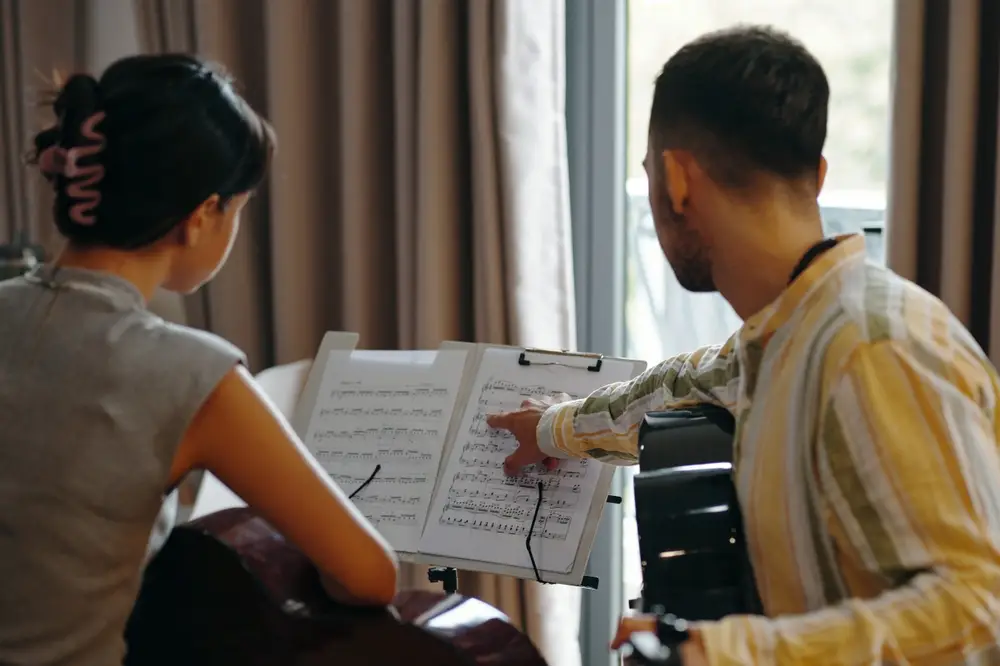
For an artist already established locally, teaching can also play an important role in integration. It provides opportunities to meet other musicians, families, cultural institutions, and local stakeholders while diversifying income.
The cost of living in Andorra
Housing should be carefully considered before moving. Portraying Andorra as a destination where rents are necessarily low would be misleading. The property market can be tight, and prices vary significantly depending on the parish, size, condition of the property, and time of year.
For a musician, the issue is not limited to the rent itself. An apartment that is perfectly suited to a family may be completely unsuitable for someone who needs to record vocals, store several instruments, or work with studio monitors. Before signing a lease, it is important to consider how the property will actually be used, its sound insulation, the neighbours, and any condominium rules. In some cases, keeping the home and studio separate may be much more comfortable.
The cost of travel, insurance, food, and potentially the storage or import of professional equipment should also be factored in. Highly specialised instruments and certain studio equipment may be easier to source in France or Spain than locally.
Healthcare and social security
Social protection is another issue to anticipate before moving. Residents carrying out professional activities may be affiliated with the CASS, Andorra's Social Security Fund, depending on their status and the applicable rules.
The Andorran healthcare system also operates through reimbursement mechanisms that may leave part of the costs to be paid by the patient. Supplementary insurance may therefore be worthwhile depending on the level of coverage desired.
For musicians who travel frequently, this issue requires even greater attention. Good local coverage does not necessarily guarantee identical coverage during a several-week international tour. It may be useful to check separately the coverage provided for international healthcare, accidents, tour cancellations, and, when professional equipment is particularly valuable, the instruments themselves.

Living in Andorra with your family
Moving as a family can be one of the factors that makes Andorra attractive. The small size of the territory makes daily travel easier, and several education systems coexist, notably Andorran, French, and Spanish. For artists with children, this provides different options for maintaining linguistic and educational continuity.
The family situation should nevertheless be factored into the tax residency analysis from the outset. When someone claims to have transferred their centre of life to another country, the place where their family actually lives can be an important factor. A consistent relocation is therefore generally easier to substantiate when it reflects a genuine life project rather than simply an administrative address.

Realize your expatriation project without further delay!
Make an appointment
The language: do you need to speak catalan?
Catalan is the official language of Andorra. In everyday life, however, Spanish and French are also commonly spoken.
It is therefore possible to begin settling in without speaking Catalan fluently. In the medium term, however, learning the language can greatly facilitate integration, professional relationships, and certain administrative procedures. A basic level of Catalan is also now required to renew Andorran residency.
For a musician who genuinely wants to participate in the local cultural scene, making this effort can also help build much more natural relationships with local residents. Learning a few basics before moving is rarely time wasted.
The limitations of moving to Andorra as a musician
Andorra has genuine advantages, but it is not an ideal destination for every artist. A musician who wants to go out every night, meet producers every day, attend dozens of concerts a week, and work within a huge network of studios will probably feel more comfortable in a major city. An artist whose career involves several flights a week will also need to take into account the absence of an international airport within the territory.
Conversely, a composer, producer, DJ, songwriter, or musician who can carry out much of their work remotely and wants a peaceful environment while remaining close to France and Spain may find an interesting balance. This alignment between lifestyle and working style should ultimately guide the decision.
Should you move to Andorra as a musician?
There is no one-size-fits-all answer. Andorra can be particularly attractive for an artist whose income is already relatively stable, who has an international business, and who genuinely wishes to transfer their place of residence. Taxation can be one of the benefits of the move, but it should not be its sole foundation.
Before moving, it is preferable to simulate your actual situation by taking into account artistic income, copyright royalties, companies you may own, the countries where concerts are organised, social security contributions, housing, and travel-related costs. This type of simulation is often far more revealing than simply comparing the maximum French tax rate with the maximum Andorran rate.
For some artists, the tax savings may be significant. For others, mobility constraints or the structure of their income may substantially reduce the benefits of relocating. A successful move to Andorra ultimately rests on three elements: a genuinely lived-in residence, a professional organisation compatible with the territory, and a tax structure based on the artist’s actual situation. When these three dimensions are aligned, the principality can become much more than a tax-friendly destination: it can provide a stable home base from which to develop an international music career.