Getting around Andorra: transport, access and practical advice
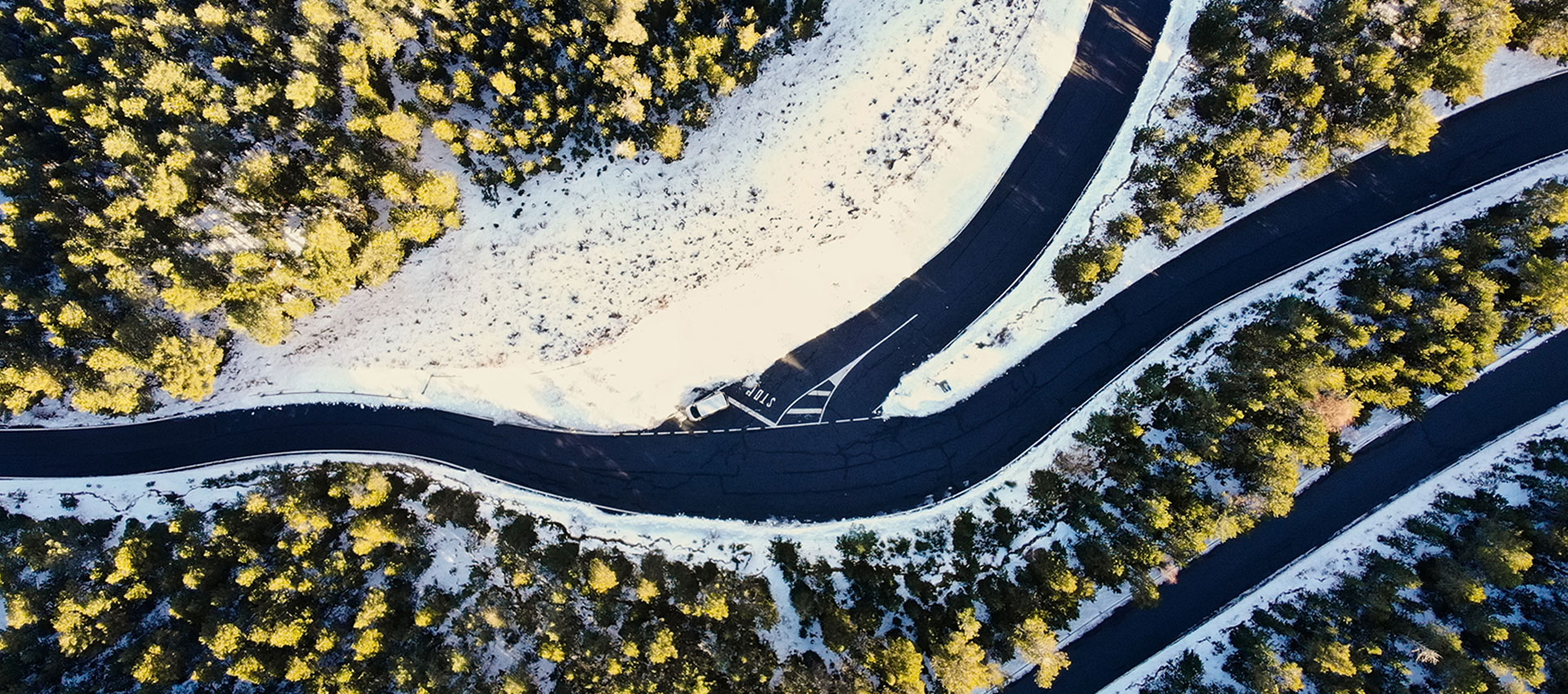
Getting around Andorra requires a little more planning than travelling to a destination served by rail or a major airport. The reason is simple: located in the heart of the Pyrenees, the Principality relies mainly on its road network. Cars and buses are the two most common options for reaching the country and travelling between Andorra la Vella, the villages and the mountain resorts.
That does not necessarily mean that a car is essential throughout your stay. Depending on where you are staying and what you plan to do, buses, shuttles, walking or even cycling may be more convenient. In winter, another factor comes into play: the weather. Taking a few precautions before setting off can help avoid many of the difficulties associated with snow, traffic and parking.
Here is the information you really need to know to choose the best way to get around Andorra.
How does public transport work in Andorra?
The geography largely explains how travel is organised in the Principality. Andorra covers a mountainous area crossed by valleys, with towns and villages located at very different altitudes. Travel is mainly by road.
There is no railway station in Andorra. To arrive by train, you need to get off at a station in France or Spain and then complete the journey by road. The Principality also does not have a major international airport within its territory.
Two road access points account for most arrivals. To the south, the Spanish border provides access to Andorra from La Seu d’Urgell. To the north-east, the French route passes through Pas de la Case.
This configuration is important when planning your trip. During busy periods, particularly certain winter weekends, school holidays and major departure periods, traffic at the borders and on the main roads can increase significantly.
If your accommodation is in a central area and your stay is mainly focused on shopping, spas or urban areas, public transport may be sufficient. Conversely, a car offers greater freedom to explore several valleys, reach certain hiking trailheads or organise your days without depending on timetables.
Getting to Andorra from France or Spain
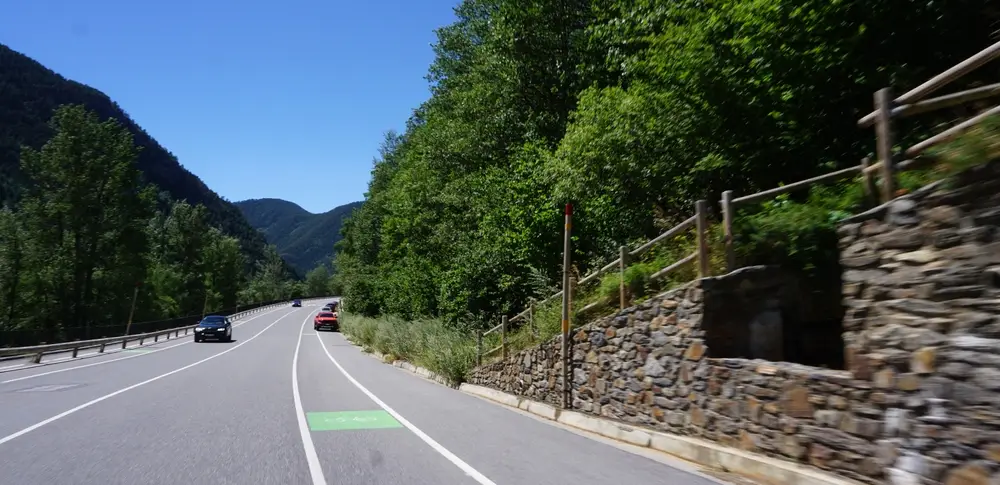
From France, the usual route goes through Toulouse, Foix and Ax-les-Thermes before reaching Pas de la Case and then continuing into the Principality. The final section runs through mountainous terrain. In winter, weather conditions can have a significant impact on journey times.
From Spain, access is generally via La Seu d’Urgell before crossing the southern border. Barcelona is one of the main departure points for visitors arriving from abroad.
In both cases, it is better to treat the journey times provided by a GPS as estimates rather than guarantees. Heavy traffic at the border, a snowfall event or simply the crowds during a ski weekend can extend the journey.
If you are travelling in winter, check road conditions before setting off and make sure your vehicle is properly equipped. This precaution is particularly important when snow is forecast.
Can you reach Andorra by plane?
Andorra does not have a major international airport directly connected to its capital. To travel by plane, you need to combine a flight with a road transfer. Barcelona-El Prat and Toulouse-Blagnac are among the airports commonly used to reach the Principality. Andorra–La Seu d’Urgell Airport, located in Catalonia near the border, is another option for certain routes. After landing, the journey to Andorra can be completed by bus, shuttle, taxi or rental car.
When choosing between these options, do not look only at the transfer price. Take into account your arrival time, final destination and amount of luggage. A shuttle can be very convenient for travelling directly to a tourist area, while a rental car becomes more attractive if you plan to make several trips during your stay.
It is also advisable to check schedules and booking conditions directly with the transport operators before travelling, as services may vary depending on the season.
Driving in Andorra: what you need to know
A car remains particularly convenient in Andorra, especially if you want to venture beyond the most urbanised areas. The main road network serves Andorra la Vella, Escaldes-Engordany and the various parishes before continuing into the valleys and mountain areas. The CG-1 is the main route towards the Spanish border, while the CG-2 serves Encamp, Canillo, Pas de la Case and the route towards France.
Distances may appear relatively short on a map, but you should not think only in terms of kilometres. The terrain, traffic and winter conditions can significantly affect the actual journey time. In winter, particular attention should be paid to preparing your vehicle. Before setting off, check the rules applicable to winter equipment as well as the road conditions for the day. A road that is perfectly passable in the morning can become more difficult a few hours later in the event of heavy snowfall.
Parking is another point to anticipate. In the busy areas of Andorra la Vella and Escaldes-Engordany, looking for a space on the street is not always the best strategy. Public or covered car parks are often more convenient, particularly if you plan to spend several hours in the centre.
For a day spent mainly in urban areas, leaving the car in the same place and continuing on foot can also help avoid several short trips and repeatedly searching for a parking space.

Renting a car in Andorra: is it really useful?
It all depends on your plans. For a stay focused on Andorra la Vella, Escaldes-Engordany or a resort with good transport connections, renting a car is not necessarily essential. This allows you to avoid parking, mountain driving and the difficulties associated with winter conditions.
Renting a car becomes much more useful, however, if you want to explore different parishes, reach less accessible places or organise several excursions on the same day.
Before booking, check exactly what is included in the rental agreement. In winter, make sure in particular that the vehicle has equipment suitable for the expected conditions. It is also useful to check the security deposit, insurance coverage, any mileage restrictions and the rules concerning crossing borders. The price displayed during an initial search is therefore not enough to properly compare two offers.
Getting around Andorra by bus
The bus is the main alternative to the car for everyday travel.
The network connects the main populated areas and several tourist destinations. For visitors staying close to a well-served bus stop, it is entirely possible to organise much of their stay without a private vehicle. This is particularly useful if you want to avoid driving in the busiest areas or looking for a parking space every time you travel.
However, the usefulness of the bus depends on your plans. For travelling between urban centres, it is often a straightforward solution. To reach a remote location, a specific hiking trailhead or several destinations spread across different areas on the same day, a car generally remains more flexible.
As timetables, routes and fares may change, it is better to consult official information at the time of your stay rather than relying on schedules found several months earlier.
Getting to the ski resorts without a car
A ski trip does not automatically mean that you need to use your car every morning. Depending on the resort, municipality and accommodation you choose, different shuttle services can make it easier to reach the ski areas. This has an obvious advantage: you avoid driving in the snow, taking your vehicle to the foot of the slopes and looking for a parking space during the busiest periods.
Grandvalira, Pal Arinsal and Ordino Arcalís are spread across different parts of the country. Before booking your hotel, it may therefore be worth looking not only at its distance from the slopes, but also at the transport options available around the accommodation.
This detail can significantly affect your overall experience. Accommodation that is slightly further away but well connected can sometimes be more convenient than a place where you have to use your car every time you want to go somewhere.
Taxis and on-demand transport
Taxis are mainly useful for occasional trips, late arrivals, journeys with a lot of luggage or routes that are difficult to complete by bus.
They can be a useful complementary option. There is no need to choose a single mode of transport for your entire stay: you can arrive by bus, make your daily journeys on foot or by public transport and book a taxi for a specific excursion or transfer.
For longer journeys, it is advisable to ask about the conditions and request an estimated price before setting off. Availability may also vary depending on the location, time and season.
Walking in Andorra: practical, but not everywhere in the same way

In central areas, walking is often underestimated. Andorra la Vella and Escaldes-Engordany are well suited to many journeys on foot, particularly for reaching shops, restaurants, hotels and tourist facilities located in the central areas.
However, the terrain remains a reality. A distance that looks short on a map may involve a significant uphill section. This should be taken into account when travelling with young children, luggage or a pushchair, or for anyone with walking difficulties.
As soon as you leave the urban areas, walking takes on a different dimension. Andorra has an environment particularly well suited to hiking, but a mountain hiking route should not be confused with a simple urban journey. Weather conditions, elevation gain, equipment and trail difficulty should all be checked before setting off.
Getting around by bicycle and electric bike
Cycling is another way to explore Andorra, but the terrain makes it quite different from cycling in a flat city.
Sport cyclists find the mountain roads particularly well suited to climbs. For everyday journeys, electric assistance makes cycling much more accessible, especially in areas where the gradients quickly become demanding.
Cycling can be useful for short trips or for exploring certain areas at a different pace. However, traffic, weather conditions and elevation gain should be taken into account before making it your main means of transport.
For a mountain ride, it is better to plan your route in advance rather than relying solely on the distance displayed by an app.
Electric mobility: an interesting solution in the mountains?
Electric mobility is developing in Andorra. For both cars and bicycles, it offers clear advantages in a country where journeys are often short but involve significant differences in altitude.
If you are travelling with an electric car, identify charging options before your stay and, above all, near your accommodation. Energy consumption can vary significantly depending on elevation gain, temperature and the use of heating in winter.
The best approach is to incorporate charging into your schedule rather than waiting until the battery is almost empty. Charging overnight at your hotel, during a visit or during a longer break is generally much less restrictive.
Getting around Andorra with reduced mobility
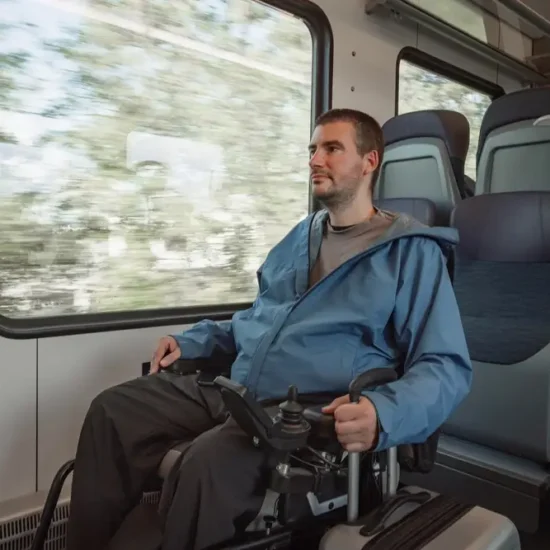
For a person with reduced mobility, planning journeys in advance is particularly important because of the terrain. Urban areas have facilities that make certain journeys easier, but accessibility can vary from one location to another. A steep slope or a few hundred metres between a stop and a destination can be enough to make a journey more complicated than it appears on a map.
Before travelling, it is advisable to check directly the accessibility of the transport service, the relevant stop and the final destination. This also applies to adapted taxis and shuttle services. Booking in advance can confirm that a vehicle suited to the person’s needs will actually be available at the desired time.
For accommodation, the word “accessible” should not be the only criterion you check. Access from the street, the slope in the surrounding area, the availability of suitable parking and the actual distance to public transport can be just as important.

Realize your expatriation project without further delay!
Make an appointment
Which apps should you use to get around Andorra?
Your smartphone becomes particularly useful when weather or traffic conditions deteriorate. Before travelling, the most useful information generally includes traffic conditions, any road restrictions, weather conditions and updated public transport schedules.
Official mobility tools and institutional services should be prioritised for information that could affect safety or the immediate organisation of your journey. Standard mapping apps remain useful for planning a route, but they do not necessarily replace local information when a road is affected by snow or a temporary restriction.
In winter, taking a few minutes to check conditions before leaving your accommodation is probably one of the most useful habits to adopt.
Should you choose a car or public transport?
There is no single answer that applies to every stay. A car is particularly suitable for travellers who want to freely explore several valleys, regularly move between different areas or reach places with limited public transport. It provides flexibility, but also means dealing with traffic, parking and, in winter, driving conditions.
Buses and shuttles are more appealing when staying in a well-served area and when you want to avoid these constraints. For an urban stay or certain ski holidays, they may allow you to manage almost entirely without a car.
Taxis are more of an occasional solution, while walking works particularly well for journeys in central areas. Cycling, especially with an electric bike, can complement these options when the weather and terrain are suitable.
In practice, the most comfortable solution is often to combine several modes of transport rather than trying to use the same one throughout the entire trip.
Our tips for getting around Andorra more easily
The main mistake is to plan your journeys based solely on distances. In Andorra, ten kilometres does not always mean the same travel time. Terrain, weather, tourist crowds and border crossings can sometimes matter more than the number of kilometres.
During the ski season, allow extra time when you need to meet a specific schedule, particularly for an airport transfer. Where possible, it is wiser to avoid the busiest departure and return periods.
If you are travelling by car in winter, find out before setting off about the required equipment and road conditions. Do not wait until you reach the foot of a mountain pass to check.
For urban journeys, compare the actual cost and time required before automatically getting back in the car. Between traffic and searching for parking, walking or taking the bus may be easier for a relatively short journey.
Finally, check schedules, fares and road conditions shortly before your stay. In a mountain destination, some information is naturally seasonal and can change quickly.
What is the best way to get around Andorra?
If you mainly want to explore Andorra la Vella and Escaldes-Engordany, it is entirely possible to prioritise walking and public transport.
For a ski holiday, the best choice depends primarily on the location of your accommodation and the shuttles available to the ski area you have chosen. Checking this before booking can save you from needing a car for the entire week.
To explore different valleys, go on several hikes or discover places further away from the best-served routes, a car remains the most flexible option.
Andorra is a small country, but its terrain completely changes the way you should approach getting around. Rather than looking for the “ideal” mode of transport, the most effective approach is to choose the one that suits each stage of your stay. A car for exploring a valley, a bus to reach the centre, a shuttle to the slopes and walking once you arrive can all work perfectly well together.
This organisation, more than the distance travelled, is what allows you to enjoy Andorra without turning every journey into a constraint.