What is the currency in Andorra? Practical guide to paying, withdrawing and exchanging money
You are preparing a trip to Andorra and wondering what currency to bring? The answer is simple: the currency used in Andorra is the euro (€). The Principality's situation is nevertheless quite particular. Andorra is not part of the European Union, but it officially uses the euro thanks to a monetary agreement concluded with the European Union. It is even authorised to issue its own euro coins. For a traveller, this considerably simplifies things. If you arrive from France or another country using the euro, you have no conversion to carry out. Hotels, restaurants, shops, ski resorts and other everyday expenses are paid in euros. In this guide, we review Andorra's monetary history, Andorran coins, card payments, withdrawals and useful precautions to avoid unnecessary bank fees.
What is the official currency in Andorra?
The official currency of Andorra is the euro, whose international code is EUR. The Principality nevertheless constitutes a particular case in Europe.
It is not a member of the European Union, but a monetary agreement with the EU allows it to officially use the single currency and issue a limited quantity of euro coins bearing Andorran motifs. In everyday life, there is no "Andorran currency" different from the euro to obtain before your departure. Prices are displayed in euros and purchases are settled in this currency.
This situation is particularly practical for French or Spanish visitors. There is no exchange rate between the euro used in France, Spain and that used in Andorra. One euro remains one euro.
It is nevertheless necessary to distinguish the currency used from the banking territory in which the transaction is carried out. Depending on your bank and your contract, a payment or withdrawal made in Andorra may be subject to different conditions from those applied in a European Union country. Before leaving, it would be wiser to consult your bank card fee schedule rather than assuming that all transactions will be free.
How did Andorra use money before the euro?
Andorra's monetary history directly reflects its geographical situation between France and Spain. For much of the 20th century, the Principality did not have a national currency intended for everyday payments.
The French franc and the Spanish peseta circulated there simultaneously. Residents, merchants and visitors naturally used the currencies of the two neighbouring countries. The arrival of the euro in France and Spain changed the situation.
From 2002, the euro became established in the Principality in place of the franc and the peseta. The monetary relationship between Andorra and the European Union was then formalised by an agreement signed in 2011. This notably allowed the Principality to mint its own euro coins.
The first Andorran coins were issued a few years later. This timeline helps avoid a frequent confusion that deserves to be clarified. Andorra was already using the euro before obtaining the right to issue its own coins.
Do Andorran euro coins have a particular feature? Yes.
Since 2014, Andorra can issue its own euro coins within the limits set by its monetary agreement with the European Union. Like other coins of the single currency, they have a European face and a national face.

An Andorran 1 € coin is therefore worth exactly 1 € when used to pay. Their interest can however exceed their face value for collectors.
With limited issuance volumes, certain vintages, sets or commemorative coins are sought after on the numismatic market. This does not mean that all Andorran coins found in your change are worth more than the amount inscribed on them: collector value depends specifically on the mintage, state of preservation and demand.
If you receive an Andorran coin during your stay, take a few seconds to look at it before spending it. It can make a more original souvenir than an object bought in a tourist shop.
The monetary agreement with the European Union
What is the Andorran diner? The term "diner" can cause confusion when looking at Andorra's currency.
There are numismatic issues denominated in diners, but the diner is not the currency used to settle everyday purchases in the Principality. It must be considered in a context of collection and commemoration, and not as an alternative to the euro in shops.
A traveller therefore has no reason to seek to convert their euros into diners before travelling to Andorra. To pay for a hotel, restaurant, groceries or a ski pass, it is the euro that counts.
Un voyageur n’a de ce fait aucune raison de chercher à convertir ses euros en diners avant de se rendre en Andorre. Pour payer un hôtel, un restaurant, des courses ou un forfait de ski, c’est bien l’euro qui compte.
Should you exchange money before travelling to Andorra?
If your bank account is already denominated in euros and you have euros in cash, no exchange is necessary. The question arises mainly for travellers arriving with US dollars, Swiss francs, pounds sterling or another currency.
In this case, it is preferable to compare the total cost of conversion rather than looking only at the displayed exchange rate. An apparently advantageous operation can indeed include a fixed commission or other fees. The right reflex is to ask how many euros you will actually receive for the amount you wish to convert.
Exchange services may be available in the most frequented areas and with certain financial institutions. As conditions evolve over time, it is better to check rates and commissions at the time of travel.
Can you pay easily by bank card in Andorra?
Card payment is common in Andorra, notably in hotels, restaurants, ski resorts, supermarkets and shops in the main tourist areas. Cards belonging to major international networks, including Visa and Mastercard, are widely used.
Keeping a few euros in cash nevertheless remains practical for small expenses or when a payment terminal is temporarily unavailable. The main point to check is on your bank's side. Even if the transaction is carried out in euros, Andorra is not a member state of the European Union.
The fee conditions applied to operations carried out in the Principality can thus depend on the institution that issued your card and the contract associated with it. Before departure, check the cost of a card payment in Andorra and any fixed or proportional fees applied to withdrawals. This check of a few minutes can avoid unpleasant surprises on your bank statement.
Avant le départ, vérifiez le coût d’un paiement par carte en Andorre et les éventuels frais fixes ou proportionnels appliqués aux retraits. Cette vérification de quelques minutes peut éviter de mauvaises surprises sur le relevé bancaire.
Where to withdraw money in Andorra?
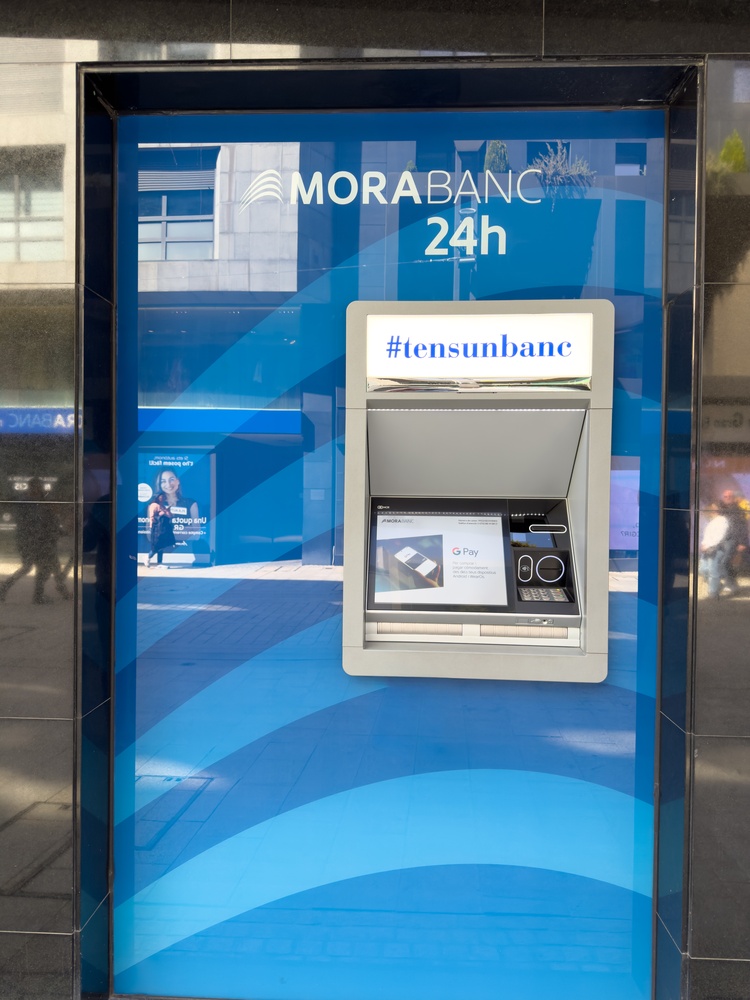
Cash machines, called caixers automàtics in Catalan, are present in the main urban and tourist areas. You can withdraw euros directly on site with a card compatible with international networks.
The maximum amount available per withdrawal is not universal. It can depend both on the machine used and the limits set by your own bank. Rather than relying on a fixed limit announced in advance, check your card limits and the information displayed by the machine before confirming the operation.
Also pay attention to fees presented on screen. When specific fees are applied by the machine, their amount must be taken into account in addition to those possibly charged by your bank. If each withdrawal incurs a fixed commission, making several small withdrawals can quickly cost more than a reduced number of withdrawals.
It nevertheless remains preferable not to carry unnecessarily a large sum of cash. jpg)
What are the main banks in Andorra?
The Andorran banking landscape has changed considerably over the years, particularly following mergers between institutions.
It is important not to rely on old bank lists that still circulate on certain websites. The current banking sector notably includes Andbank, Creand and MoraBanc.
These institutions offer banking services to residents and, depending on their offers and conditions, to certain international clients. Andorra also has its own financial supervision framework.
Its regulatory alignment with European standards has strengthened over time, essentially in the areas of financial transparency, anti-money laundering and tax information exchange. For an important step such as opening an account, an investment or transferring a substantial sum, it is advisable to consult the institution concerned and the competent authorities directly.
Access conditions, required documents, fees and tax rules can evolve and depend on the client's situation.
What budget should you plan for a stay in Andorra?
There is no daily budget valid for all travellers. The cost of a stay depends heavily on the period, accommodation, resort chosen and planned activities.
In winter, ski-related attendance can greatly vary accommodation prices. Certain summer periods are in high demand. A rate observed on a given date can be very different a few weeks later.
To build a realistic budget, it is better to check prices corresponding precisely to your travel dates rather than relying on a general average. Accommodation and mountain activities often represent a significant part of the budget, while restaurant and shopping expenses depend more on each person's habits. Andorra also applies its own general indirect tax, the IGI, whose general rate is lower than standard French and Spanish VAT rates.
This tax system contributes to the Principality's commercial reputation, but it does not automatically mean that all products are cheaper there. Comparing remains essential.
Is shopping really cheaper in Andorra?
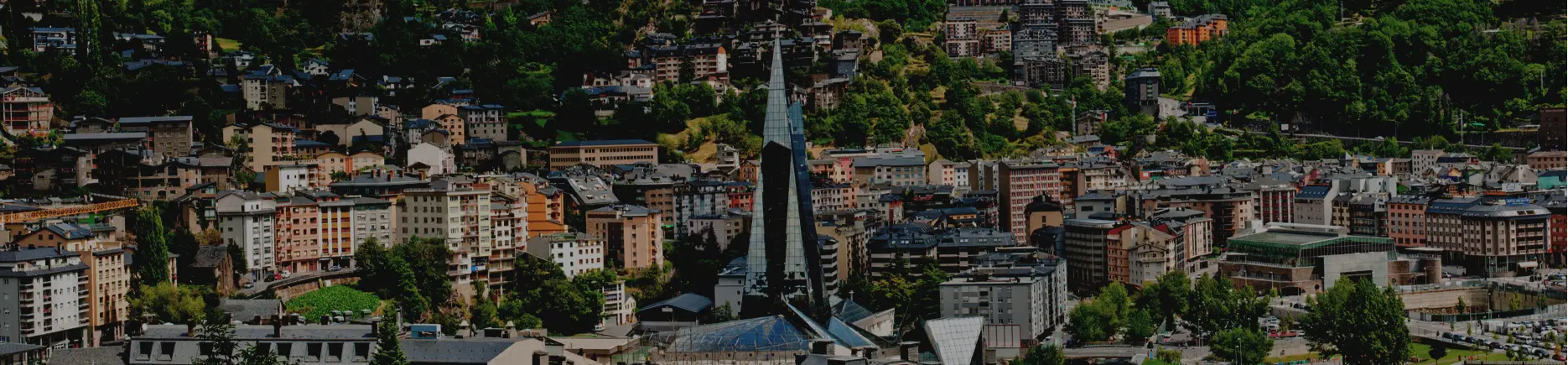
Shopping is one of the reasons why many French and Spanish visitors travel to Andorra. The main shopping areas are concentrated around Andorra la Vella and Escaldes-Engordany. Perfumes and cosmetics, sports equipment, electronics, clothing and food products are among the most common purchases. However, this favourable tax environment does not necessarily mean “the lowest price”.
Prices vary depending on brands, promotions and retailers. For an expensive product, comparing the price in Andorra with the price offered in France or Spain before buying is naturally more relevant than assuming it will always be cheaper. Keep your receipts and invoices, particularly for products covered by a warranty.

Be aware of duty-free allowances when returning
This is probably one of the most important practical points to know when shopping in Andorra. The Principality has a special customs status. The fact that you have legally purchased a product in Andorra does not necessarily mean that you can bring any quantity of it into France or Spain without completing any formalities. Specific duty-free allowances and limits may apply when entering the European Union, particularly for certain categories of goods such as tobacco and alcoholic beverages.
These rules may change and also depend on the nature and quantity of the goods being transported. Before returning with significant purchases, consult the official customs information for the country through which you will enter the European Union. This is much more reliable than relying on an old allowance found online.