Is Andorra a country? Understanding its status in 8 points
Yes, Andorra is indeed a country. More precisely, it is a sovereign European state situated in the heart of the Pyrenees, between France and Spain. The question may nevertheless seem legitimate. With only 468 km², a political organisation founded on two co-princes and particularly close ties with its neighbours, the Principality does not quite resemble the European states we are used to. However, its independence does not rest solely on a historical tradition. Andorra has its own Constitution, government, parliament, judiciary, legislation and foreign policy. It is recognised by the international community and has held a seat at the United Nations since 1993. To understand what really makes Andorra a country, one must look beyond its small area. Its history, its institutional system and its place in Europe make it easier to grasp how this atypical state functions.
1. Is Andorra really an independent country?
The answer is unambiguous: yes. In international law, the existence of a state rests specifically on elements such as a defined territory, a permanent population, a government and the capacity to maintain relations with other states.
Andorra meets these criteria. The Principality has a territory of 468 km² and its own institutions. It adopts its own laws, organises its elections and conducts its international relations. It is neither a French region, nor a Spanish autonomous community, nor a territory jointly administered by France and Spain.
Confusion often arises from its co-principality system. Andorra does indeed have two heads of state: the Bishop of Urgell and the President of the French Republic. This institutional particularity does not, however, challenge the country's sovereignty. Since the Constitution of 1993, Andorra is clearly organised as a democratic and sovereign state governed by law.
The co-princes hold a defined constitutional role while the government and the General Council exercise the political responsibilities laid down by Andorran institutions. International recognition provides further confirmation. Andorra has been a member of the United Nations since 1993 and participates in several international organisations, including the Council of Europe and the World Trade Organisation. In other words, the small size of the territory and the originality of its institutions should not be confused with a lack of independence.
Autrement dit, la petite taille du territoire et l’originalité de ses institutions ne doivent pas être confondues avec une absence d’indépendance.
2. Why does Andorra have two co-princes?
To understand this particularity, one must go back to the Middle Ages.
The Andorran territory was then at the heart of a power rivalry between the Bishop of Urgell and the Count of Foix. The paréage of 1278 made it possible to organise the sharing of their rights over the territory. This agreement is one of the major historical milestones in the origins of the co-principality.
The system has endured over the centuries, evolving progressively. The rights associated with the Count of Foix were eventually transferred to the French crown and, in the current institutional framework, to the President of the French Republic. The other co-prince remains the Bishop of Urgell, whose seat is in Catalonia.

Day-to-day political life is conducted by Andorran institutions, in particular the government and the General Council. The country's political history is not limited to the co-princes, either. In 1419 the Council of the Land appeared, considered the ancestor of the present parliament.
This tradition of local political representation shows that Andorran institutions have been built over several centuries. The year 1993 marks the major contemporary turning point. The adoption of the Constitution definitively modernised the country's institutional functioning, organised the separation of powers and confirmed its international status.
It is this combination of medieval heritage and modern parliamentary democracy that makes the Andorran political system so distinctive.
3. A small territory with a strong identity
Andorra lies in the eastern part of the Pyrenees, between France to the north and Spain to the south. With its 468 km², it belongs to the family of European micro-states, alongside notably Monaco, Liechtenstein, San Marino and the Vatican.
Its small size does not mean, however, that its territory is uniform. Mountain relief strongly structures life in the country. Inhabited areas and main transport routes naturally concentrate in the valleys, while many peaks exceed 2,000 metres in altitude.
Administratively, Andorra is divided into seven parishes: Canillo, Encamp, Ordino, La Massana, Andorra la Vella, Sant Julià de Lòria and Escaldes-Engordany. The parishes have local institutions called «Comú», which intervene in different areas of local life. Andorra la Vella is the capital and, together with Escaldes-Engordany, forms the country's main urban centre.
The official language is Catalan. This is an important element of Andorran national identity. In everyday life, however, it is very common to hear Spanish, French or Portuguese.
This linguistic diversity is explained in particular by the significant presence of foreign residents and by the constant relations maintained with France and Spain. This demographic reality makes Andorra a particularly international country for its size. It also helps explain why the question of Andorran identity cannot be reduced to its proximity to Catalonia, France or Spain.
The Principality does indeed have its own institutions and a distinct political identity.
4. How does the Andorran political system work?
Andorra is a parliamentary co-principality.
The two co-princes are the heads of state: the President of the French Republic and the Bishop of Urgell. Their role is nevertheless defined by the Constitution and does not correspond to that of leaders exercising political power alone. Legislative power belongs to the General Council, the Andorran parliament.
It comprises 28 elected general councillors and represents both the national territory as a whole and the different parishes. The government, meanwhile, conducts the political and administrative affairs of the country under the authority of the head of government. Andorra also has its own judicial system.
This separation of powers is essential to understanding the contemporary functioning of the Principality: behind an unusual historical institution lies today a state organised according to modern democratic principles. jpg) The parishes also retain an important role in local administration. This organisation allows a small country to maintain a strong closeness between local institutions and the population.
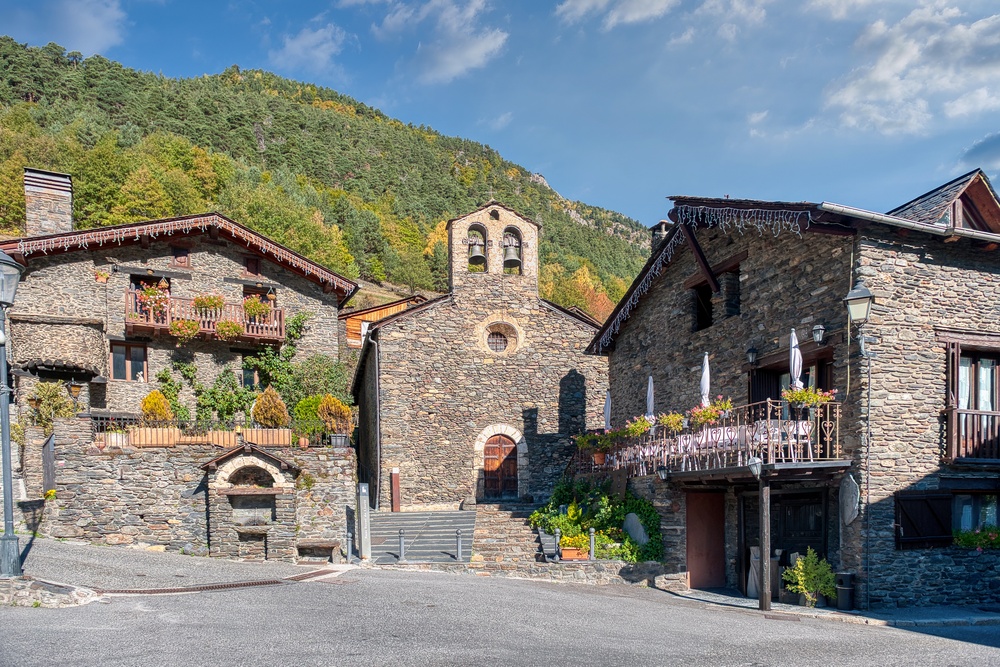
The parishes also retain an important role in local administration. This organisation allows a small country to maintain a strong closeness between local institutions and the population. The Andorran model is not simply a survival from the Middle Ages. It is rather an ancient system that has been progressively transformed and integrated into a contemporary constitutional framework.
5. What is Andorra's place in Europe?
Andorra is European geographically and maintains very close relations with the European Union, but it is not a member. This distinction is important, as economic and geographical proximity can easily create confusion.
Andorra is also not a member of the Schengen Area. Its borders with France and Spain remain external borders of this area, even though travel between the Principality and its neighbours is very frequent.
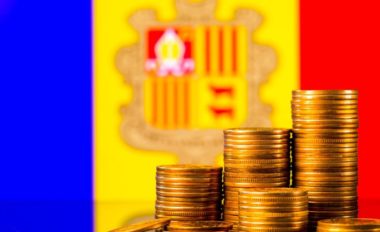
The country nevertheless uses the euro. This usage rests on a monetary agreement concluded with the European Union and allows the Principality, in particular, to issue its own euro coins within the framework set out by that agreement.
Relations with the European Union go well beyond currency. Andorra has long maintained economic and customs agreements with Europe and seeks to deepen its integration into the European market while preserving its status as an independent state.
At international level, this independence is fully established. Its admission to the UN in 1993 is one of the clearest symbols of this recognition.
The country also participates in various international institutions and has its own diplomacy. Andorra thus provides a good example of the difference between sovereignty and membership of the European Union: a country can be fully independent without being an EU member.
6. The Andorran economy: far more than taxation
When Andorra is discussed, taxation often enters the conversation very quickly. This is understandable, as tax rates are generally lower than in many European countries.
But reducing the Andorran economy to this aspect would give an incomplete picture of the country. The economy relies largely on services, trade and tourism. The mountains naturally play a major role.
In winter, ski resorts attract an international clientele, notably from France and Spain. When the snow disappears, hiking, cycling, outdoor activities and sporting events help extend tourism activity. Trade is also an important sector.
For decades, differences in taxation with neighbouring countries helped make the Principality a popular shopping destination. The financial sector has also occupied a significant place in the economy. Its functioning has, however, changed considerably.
Under the effect of international commitments undertaken on cooperation and tax transparency, Andorra has profoundly modernised its regulatory and tax framework. The country now has an income tax and a corporate tax. Presenting Andorra simply as a «tax haven» does not therefore allow one to understand the transformations achieved over the last few decades.
For someone considering setting up a company, investing or transferring residence to Andorra, the applicable rules must be studied according to their personal situation. Residence conditions, tax obligations and any investments required can change. It is therefore preferable to check the official texts in force and, when financial stakes are significant, to seek the advice of a qualified professional.
7. What is life in Andorra really like?
Daily life is deeply linked to the geography of the country.
Here, the mountain is not merely a tourist backdrop: it influences travel, urban planning, leisure and the rhythm of the seasons. Skiing, hiking and cycling naturally occupy an important place. The Madriu-Perafita-Claror valley, inscribed on the UNESCO World Heritage list, particularly illustrates the historical relationship between inhabitants and their mountain environment.
Andorran culture remains closely linked to the Catalan language and traditions. The national holiday of Our Lady of Meritxell, celebrated on 8 September, is one of the highlights of the national calendar. Other local celebrations and popular festivals bear witness to traditions that remain alive in the different parishes.
Education also presents an interesting particularity. Several educational systems coexist in the Principality, notably Andorran, French and Spanish. This organisation reflects well the country's geographical and cultural position.
One must nevertheless avoid idealising life in a micro-state. The small area brings closeness and facilitates certain journeys, but it also implies a constrained property market and a strong concentration of the population in the main valleys. Before a relocation project, housing, residence conditions, employment, taxation and travel are therefore aspects to examine in concrete terms.
8. Why do some people choose to move to Andorra?
Competitive taxation undoubtedly contributes to the Principality’s appeal, but it is not the only factor. Proximity to nature, mountain activities, its location between France and Spain, its international environment and institutional stability are also among the reasons why entrepreneurs, athletes and families may consider moving there.
However, it is important to distinguish the country’s attractive image from its actual administrative requirements. Becoming an Andorran resident does not simply involve renting a property and changing your address. Several residency categories exist, and the requirements vary depending on the applicant’s professional, family or financial plans.
Similarly, benefiting from Andorran taxation requires compliance with the applicable residency and tax rules. An international move may also have tax consequences in the country of departure. Decisions should therefore be based on up-to-date information tailored to each individual situation.

So, is Andorra a country?
Yes, without a doubt. Andorra is a sovereign state with its own territory, population, Constitution and institutions. It conducts its international relations and belongs to several international organisations, including the United Nations.
What makes the Principality unusual is not its status as a country, but the way it has built and preserved its independence. Its co-principality system has its roots in the Middle Ages, while its current institutions operate within a modern constitutional framework. Andorra uses the euro without being a member of the European Union and maintains extremely close ties with France and Spain without being politically dependent on either country.
It is precisely this combination of historical continuity, sovereignty and European integration that makes this small territory in the Pyrenees much more interesting than a mere geographical curiosity.