Where is Andorra?
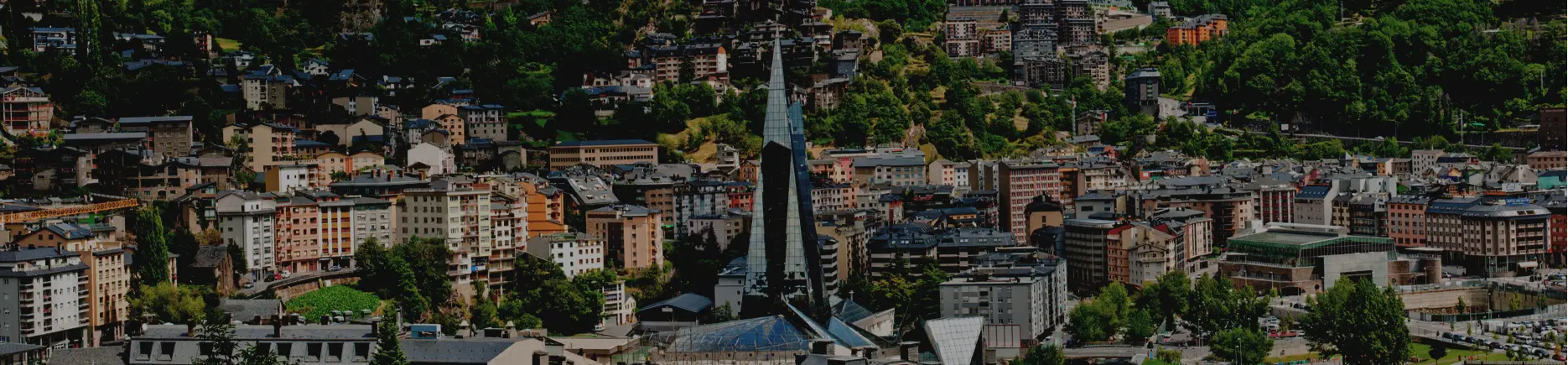
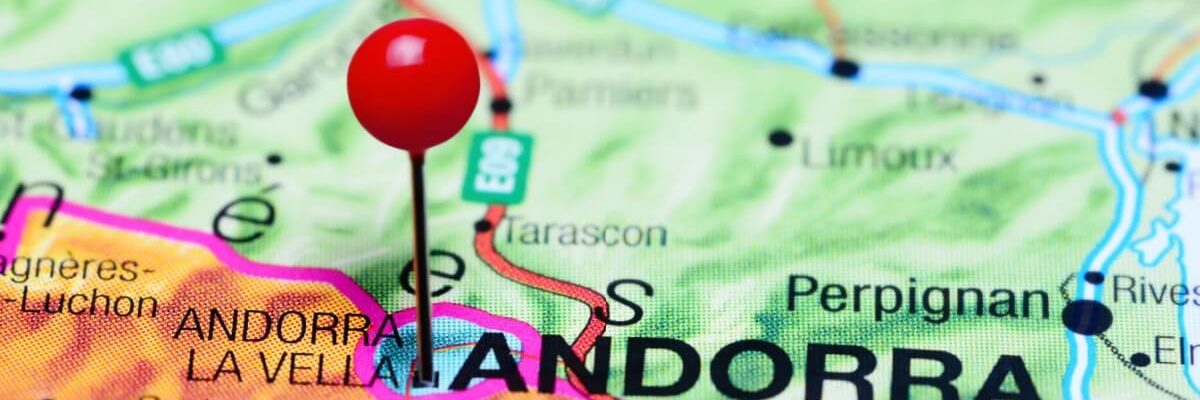
Where is Andorra? The Principality of Andorra is a mountainous country situated on the eastern side of the Pyrenees. Famous for its ski resorts, it is one of the micro-states in Europe. Despite its 468 km² area, it is nevertheless the largest among them compared with Liechtenstein, San Marino, Monaco and the Vatican. Where is Andorra? To describe its geographical situation more easily, it is landlocked between France and Spain. Its small territory is endowed with generous nature. Its relief consists of narrow valleys and high mountain peaks.
The geographical location of the Principality of Andorra
Andorra is located in south-western Europe. Here are its approximate geographical coordinates:
- Latitude: 42.5078° N
- Longitude: 1.5211° E.
A high mountain country, it has an average altitude of around 1,800 m (upper Valira basin). Its highest point is 2,943 m at Pic de la Coma Pedrosa in the parish of La Massana, near the Spanish border.
The borders France and Spain share land borders with this small Principality. With its 468 km² area, it seems tiny compared to the size of its two neighbouring countries. Without being part of the European Union or the Schengen Area, it is bounded by its Franco-Andorran border to the south of France, at the level of the departments of Ariège and Pyrénées-Orientales, and to the north and north-east of Andorra, near the parishes of Ordino, Canillo, Encamp and La Massana. To the south of Andorra and north of Spain, it is bounded by its Hispano-Andorran border. This separates Sant Julià de Lòria, Escaldes-Engordany and Encamp from Lleida, a Spanish municipality in the autonomous community of Catalonia. !parish
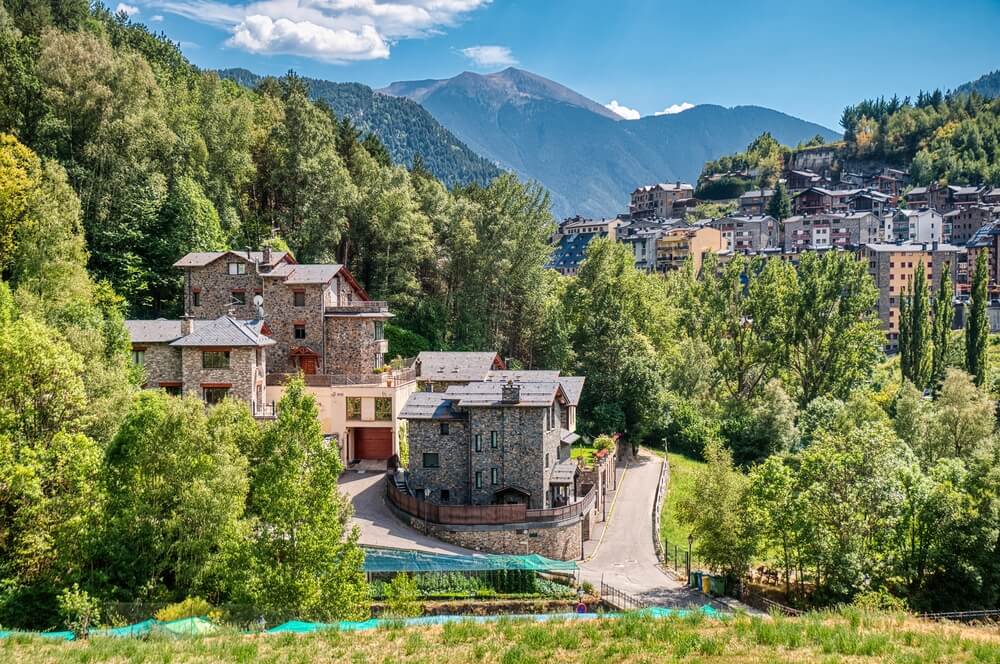
An administrative subdivision into seven parishes The administrative subdivisions that make up Andorra are its seven parishes. They are centred on its main towns. These are:
Andorra la Vella, its capital,
Canillo,
Encamp,
Escaldes-Engordany,
Ordino,
And Sant Julià de Lòria. Before 1978, there were six. Since then, Escaldes-Engordany was separated from Andorra la Vella to become a parish in its own right.
- Andorre-la-Vieille, sa capitale,
- Canillo,
- Encamp,
- Escaldes-Engordany,
- La Massana,
- Ordino,
- Et Sant Julià de Lòria.
Avant 1978, elles étaient au nombre de six. Depuis, Escaldes-Engordany a été séparée d’Andorre-la-Vieille pour être une paroisse à part entière.
Its natural environment Between deep valleys and high peaks, Andorra's natural environment remains exceptional and distinctive. Nestled in the Pyrenees mountains, it has vegetation characterised by Scots pines and boxwood.
However, valley floors allow ashes and hazels to grow. The Pyrenees and its landscapes Andorra's landscape remains very varied nevertheless.
With its forests, rivers or alpine meadows, this country plunged in the heart of the Pyrenees offers numerous hiking trails and different spaces for outdoor adventures. Land management on Andorran territory Its particularly rugged relief does not allow enough space for agriculture.
Land intended for cultivation represents only 4% of its area, mainly in Sant Julià de Lòria. Tobacco is generally grown there.
In the high mountains, land is essentially intended for grazing. As for forests, they cover approximately 34% of its area.
Note that a significant area of its territory is devoted to protected natural spaces, some of which are listed as UNESCO World Heritage. These include, among others, the Madriu-Perafita-Claror valley.
It also has the Sorteny nature park in Ordino, occupying nearly 1,080 hectares of its area. The climate in Andorra With a mountain climate, the country can record fairly harsh and snowy winters, with average temperatures of 3°C.
Summers are mild and cool. Avalanches are among the country's considerable natural risks.
They can occur from mid-winter until early summer. Landslides, rockfalls and forest fires are equally frequent risks.
Les avalanches sont parmi les risques naturels considérables du pays. Elles peuvent survenir en mi-hiver jusqu’en début de l’été. Les glissements de terrain, les chutes de terre et les feux de forêt sont autant de risques assez fréquents.
Accessibility of Andorra How to get to Andorra? What means of transport should you use to come to this small Principality?
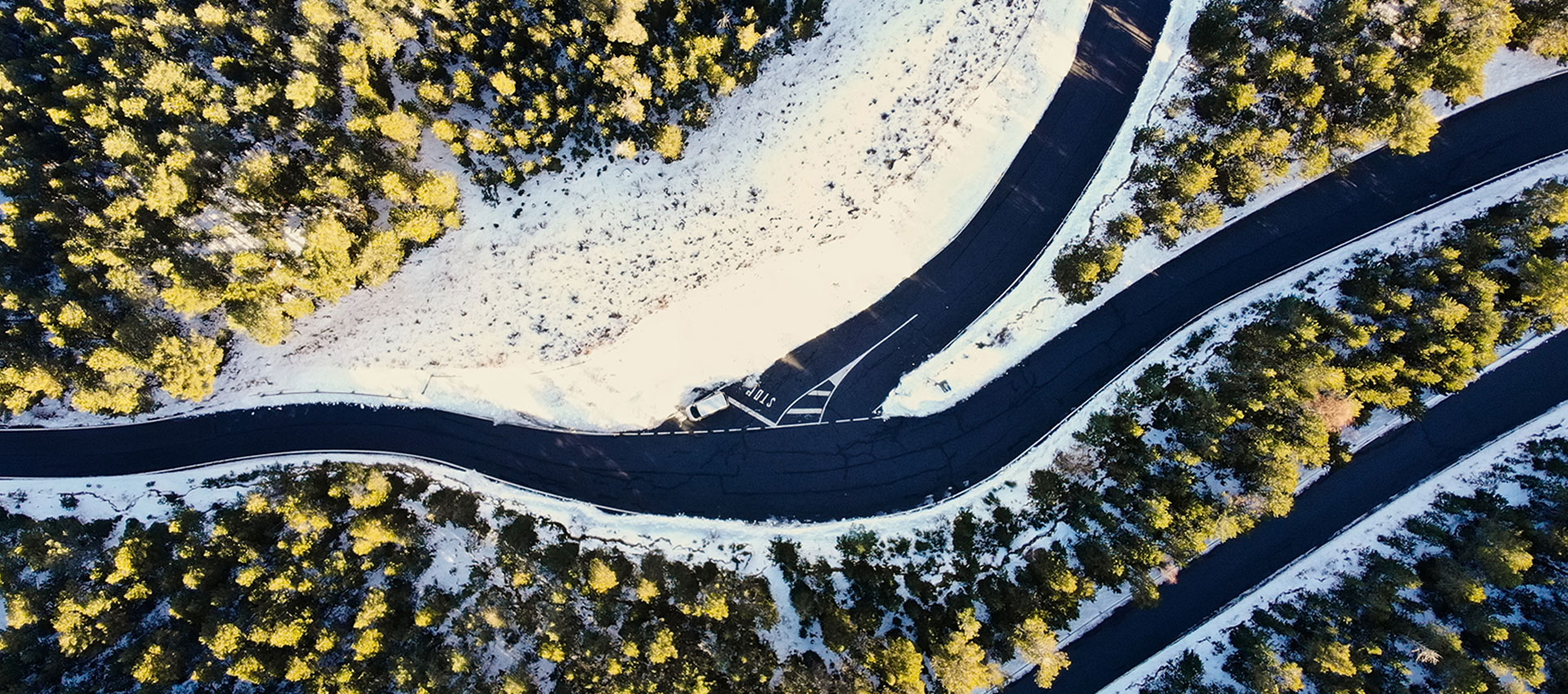
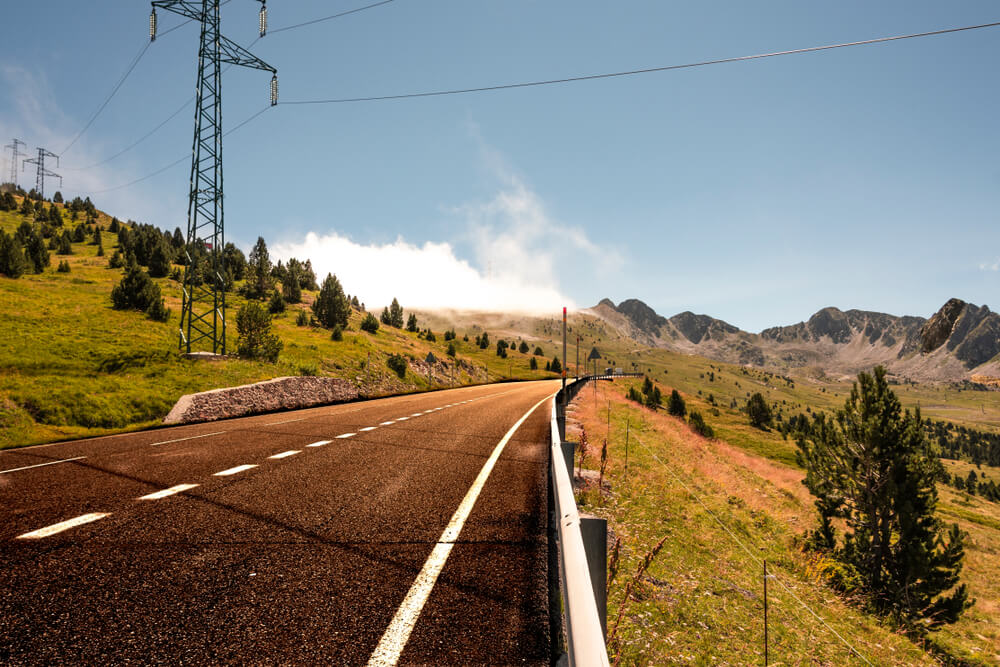
Its rather particular geographical situation does not allow certain transport infrastructure to be put in place, such as railways and airports. That said, it is entirely accessible by road from its two neighbouring countries, France and Spain.
From France, it is served by the RN22, running from L'Hospitalet-près-l'Andorre to Pas de la Casa. From Spain, it is possible to reach the Principality via the N-145, connecting it to La Seu d'Urgell in Catalonia.
As for internal transport, the country has modern infrastructure with rigorous organisation for the comfort of its residents. For buses, there are regular national lines serving its parishes.
Residents and visitors can also take a taxi, once outside or through an online booking.