How are infrastructure shaping the future of Andorra?
In Andorra, talking about infrastructure does not simply mean talking about roads, tunnels, or public buildings. In this small mountainous territory located between France and Spain, the way people travel, connect to the Internet, access healthcare, or even produce energy has a direct impact on everyday life. The Pyrenean landscape imposes very practical constraints. Road access is concentrated, travel can be disrupted by winter conditions, and the space available for construction remains limited. At the same time, Andorra must meet the needs of its residents, cross-border workers, and the many visitors who come to the principality throughout the year.
It is this contrast that makes the development of Andorra's infrastructure particularly interesting. The country is seeking to improve its accessibility without altering the character of its territory. Its government is working to modernize public services while supporting demographic growth. It is also developing new energy and digital solutions to reduce some of the constraints associated with its landlocked location.
A territory where infrastructure plays an essential role
Geography explains many of the choices made in Andorra. With steep valleys, concentrated urban areas, and relatively few routes into France and Spain, every major infrastructure project must take the terrain into account.
The road network therefore forms the backbone of transportation. It allows residents to travel between the different parishes, while also enabling goods, cross-border workers, and tourists to enter and leave the country. The smooth operation of this network therefore has consequences that go far beyond mobility: it directly affects commerce, tourism, access to public services, and economic activity.
The same interdependence can be seen in other areas. A high-performance digital connection facilitates the development of businesses and online administrative services. A reliable energy system is essential for homes, shops, hotels, and ski resorts. Healthcare and education infrastructure, meanwhile, play an important role in making the country attractive to people considering settling there permanently.
The challenge is not simply to have modern facilities. Above all, it is about making different networks work together effectively so that they can meet the constraints of a mountainous territory and accommodate visitor numbers that vary significantly depending on the season.
Getting to Andorra and getting around the country
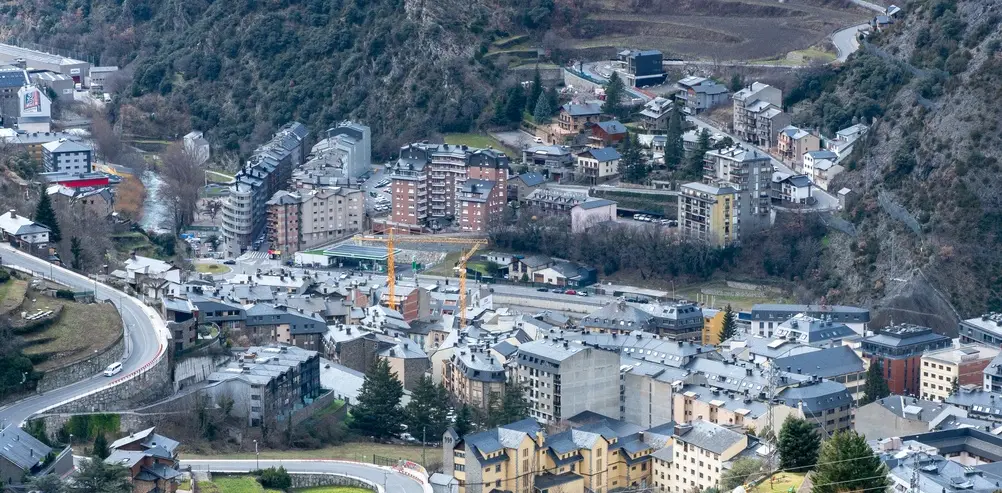
To understand the mobility challenges in Andorra, it is important to start with one essential fact: the principality has no railway network, and access to the country relies primarily on roads.
From France, entry into the country is mainly via Pas de la Case and the CG2, with the Envalira Tunnel serving as a major piece of infrastructure along this route. From Spain, access is from the south, towards Sant Julià de Lòria and then Andorra la Vella.
These two corridors handle a large proportion of international traffic. This configuration makes traffic particularly sensitive during busy periods, such as school holidays, certain winter weekends, or major events.
Weather conditions can also significantly change the situation. In winter, snow, ice, and severe weather events can quickly alter driving conditions. Before travelling, it is recommended to check the latest information provided by the official mobility services.
Winter equipment is another factor to anticipate. Rules may change depending on weather conditions and measures introduced by the authorities. When travelling during the colder months, checking road conditions and the requirements in force at the time of departure is a much more useful precaution than assuming that access routes are either always open or always difficult to navigate.
Can you travel to Andorra without a car?
Yes. Although cars remain widely used, they are not essential for reaching the principality. Coach services connect Andorra with several cities and transport hubs in France and Spain, particularly around Barcelona, Toulouse, and Catalonia. Frequencies and routes may vary depending on the operator and time of year, so it is advisable to check schedules when planning your journey.
Once there, the bus network connects the main residential and tourist areas. For visitors staying in Andorra la Vella, Escaldes-Engordany, or a municipality served by the main routes, it is entirely possible to organize a significant portion of their travel without a private vehicle.
This possibility is becoming increasingly important as the country seeks to limit congestion in its busiest areas. Public transport, shuttle services, and shared mobility solutions are therefore becoming tools for territorial planning, rather than simply alternatives to the car.
What about air and rail travel?
Andorra currently has neither an international airport within its territory nor a railway station. Andorra–La Seu d'Urgell Airport, located in Catalonia close to the border, is the nearest airport directly associated with access to the principality. However, its offering remains far smaller than that of major international airports such as Barcelona or Toulouse. It mainly offers commercial flights to Madrid and Palma de Mallorca.
For rail travel, passengers generally use railway stations in France or Spain before continuing their journey by road. Various proposals and discussions concerning improved rail connections have been raised over time, but it is important to distinguish between studies or proposals and infrastructure projects that have actually been approved and funded. For travellers, this distinction matters: today, practical travel to Andorra still primarily involves a combination of road, bus, air, or rail travel to a nearby city.
A strategic road network for the entire economy
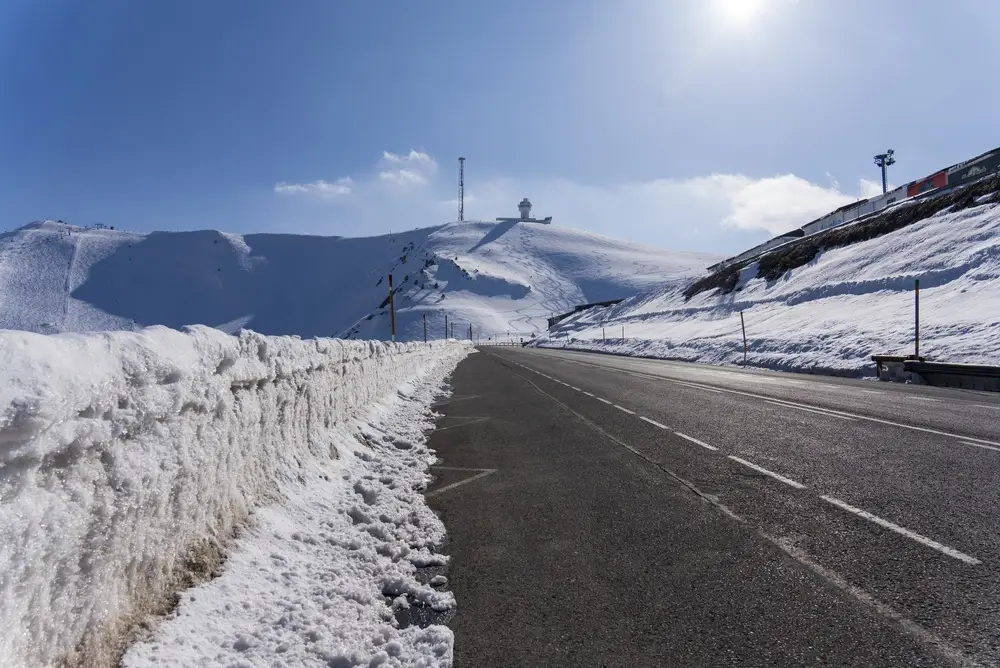
Andorran roads are not used solely for private travel. They also ensure the country's supply chain. A large proportion of the goods consumed in Andorra must cross one of its land borders. The reliability of routes to France and Spain directly affects shops, hotels, restaurants, construction sites, and many other economic activities. This dependence explains the investments made in road safety, tunnels, junction improvements, and measures to improve traffic flow in particularly busy areas.
In a country where buildable land is limited, widening a road or creating a new route is, however, more complex than it would be on a plain. Each project must take slopes, waterways, built-up areas, and environmental constraints into account. Transport infrastructure therefore needs to be planned for the long term and integrated into the broader development of the valleys.
Public transport is taking on a greater role
Andorra's mobility policy is no longer based solely on improving the road network. Public transport is gradually playing a more important role in managing travel.
The development and improvement of bus routes serve several objectives: reducing dependence on private cars, making travel easier for people without their own vehicle, and limiting congestion in the main urban areas.
The benefits are particularly noticeable on daily journeys between the central parishes. When a public transport alternative is sufficiently regular and convenient, it can prevent many additional vehicles from entering areas that are already heavily congested.
For visitors, shuttle services serving certain tourist areas and ski resorts can also make their stay easier. This helps avoid the search for parking spaces and reduces traffic during the busiest periods.
Electric mobility
The evolution of Andorra's infrastructure also extends to electric mobility. The development of charging stations is gradually keeping pace with the growing number of electric and plug-in hybrid vehicles. For both residents and travellers concerned, however, the key issue is not simply the total number of charging stations, but also their location, availability, and compatibility with the vehicle being used.
Walking and cycling are also being encouraged in certain areas. Here again, the terrain imposes obvious limitations: cycling in a Pyrenean valley does not offer the same conditions as cycling in a flat city. Infrastructure therefore needs to be adapted to actual usage and differences in elevation. In urban areas, the main objective is to create credible alternatives for short journeys while improving the quality of public spaces.
Energy: between external dependence and local production
Energy is a particularly strategic issue for Andorra.
The country produces part of its electricity domestically, notably through hydropower, but it remains dependent on interconnections with neighbouring countries for a significant share of its needs. This situation explains the interest in diversifying local production and improving energy efficiency.
Solar photovoltaic power is one of the solutions being developed. In a territory where available land is scarce, integrating solar panels into buildings can be particularly beneficial. Other solutions, such as district heating networks or certain forms of local energy recovery, can also help diversify the energy supply.
The goal is not simply to produce more energy. Reducing building consumption, improving energy efficiency, and managing demand more effectively are equally important. This issue takes on particular significance in a mountainous country, where heating accounts for a significant share of energy needs during the colder months.
Digital technology: one of Andorra's structural advantages
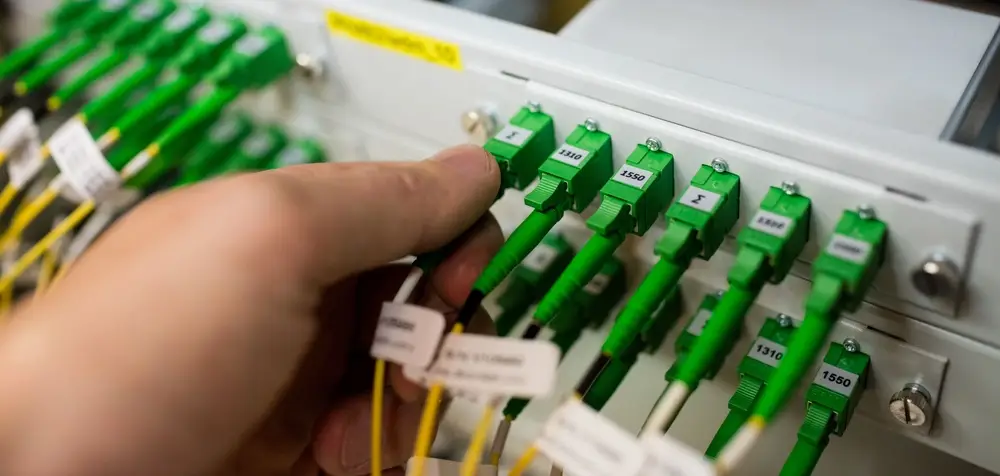
Geographical isolation does not necessarily mean digital isolation. In fact, this is one of the areas in which Andorra has sought to offset the constraints of its territory. The country has highly developed telecommunications infrastructure for its size. Fibre-optic coverage is widespread, and mobile networks continue to evolve. This connectivity allows individuals to benefit from high-performance Internet connections, but it also plays an important economic role.
For a company whose business relies on digital technology, the quality of the connection can matter more than physical proximity to a major metropolitan area. The same applies to freelancers and professionals working remotely.
Nevertheless, a country's digital appeal should not be reduced to Internet connection speeds alone. Network reliability, available services, cybersecurity, the administrative framework, and the quality of public infrastructure are equally important for businesses and residents.
Increasingly accessible online public services
Digital transformation also affects public administration.
The development of online procedures may seem secondary when discussing infrastructure, but it has a tangible impact on the relationship between residents, businesses, and public services. Being able to complete an administrative procedure without travelling becomes particularly useful in a mountainous territory where distances may be short in kilometres but not necessarily in travel time.
This development nevertheless depends on several conditions: reliable telecommunications infrastructure, accessible digital services, effective user identity management, and appropriate protection of personal data. Digitalisation may be less visible than a tunnel or a new road, but it is now fully part of the infrastructure required for a modern state to function.
Healthcare: a system organised around hospital nostra senyora de Meritxell
Hospital Nostra Senyora de Meritxell is the principality's main hospital. It is supported by various healthcare centres and professionals located throughout the territory. This organisation meets routine medical needs and provides part of the specialised care required. However, the country's small size means that it is useful to be aware of one particular reality: certain highly specialised procedures or treatments may require referral to facilities in Spain or France. It would therefore be misleading to portray the Andorran healthcare system as completely self-sufficient. Its proximity to the healthcare networks of neighbouring countries is also part of how the system operates.
For residents, the CASS, Andorra's Social Security Fund, plays a central role in the social protection and healthcare reimbursement system. Coverage arrangements may depend on the insured person's status, the healthcare professional consulted, and the treatment pathway followed. For precise medical or administrative information, it is always preferable to consult the relevant authorities directly.
A rather unique education system in Europe
Education is another distinctive feature of Andorra. Several education systems coexist within the principality, notably Andorran, French, and Spanish systems. This diversity reflects the country's history and its close ties with its two neighbours. For families considering moving to Andorra, this choice can be a genuine advantage. It allows them to choose their children's education based on language, the child's educational background, and the family's future plans.
The University of Andorra complements this offering in higher education. Given the country's size, the number of available degree programmes is naturally more limited than in neighbouring major university cities. Many students therefore continue part of their studies in Spain, France, or elsewhere in Europe.

Once again, the country's functioning relies both on its own infrastructure and on its integration with the surrounding region.
Water, waste and public utilities: the infrastructure we notice less
Some infrastructure is almost invisible as long as it works properly. Drinking water supply, sanitation, waste collection and treatment, as well as the maintenance of public utility networks, are nevertheless essential to everyday life.
In Andorra, these issues are closely linked to geography. Water resources must be managed in a mountainous environment subject to seasonal variations. The concentration of residents and tourists in certain valleys also increases pressure on infrastructure during periods of high demand.
Real estate development creates another constraint. Building new homes requires ensuring that water, sanitation, energy, and transport networks can accommodate this growth. Modern infrastructure should therefore not be judged solely by what is visible. Its ability to sustainably support population growth is just as important.
Tourism directly depends on infrastructure quality
Andorra's tourism industry particularly illustrates the link between infrastructure and the economy.
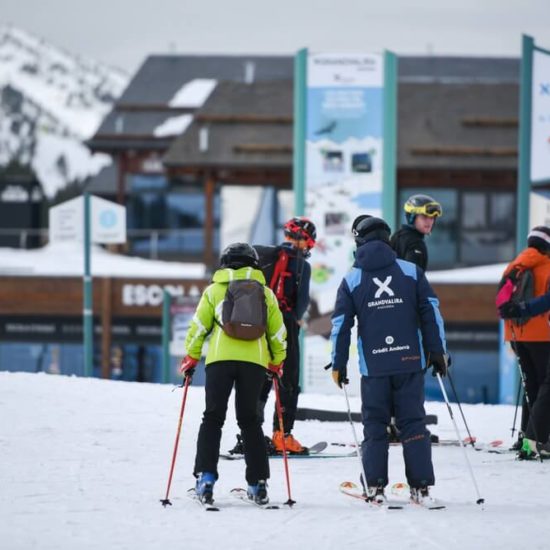
Ski resorts require lifts, safety systems, transport facilities, car parks, emergency services, and technical installations adapted to mountain conditions. Accommodation, shops, and restaurants, in turn, depend on reliable energy, digital, and road networks.
Grandvalira, the Pal Arinsal areas, and Ordino Arcalís are now major hubs for mountain activities. Their development is no longer based exclusively on winter skiing. Mountain biking, hiking, and other activities also make it possible to use these infrastructures more effectively outside the snow season.
This diversification addresses an economic challenge, but also a climate-related one. In the Pyrenees, exclusive dependence on winter sports represents a long-term risk. Adapting resorts to year-round activities therefore makes it possible to spread economic activity more evenly throughout the year.
Caldea and urban leisure facilities
Andorra's tourism infrastructure is not limited to the mountains. In Escaldes-Engordany, Caldea has become one of the country's most iconic facilities. The thermal complex helps diversify the tourism offering and gives visitors a reason to stay in the central valley regardless of snow conditions.
The development of leisure, dining, and entertainment facilities such as UNNIC, one of the country's largest leisure complexes, also forms part of this diversification strategy.
This evolution reflects a broader change in the country's tourism positioning. The objective is no longer simply to attract visitors for skiing or shopping, but to offer enough activities to extend stays and attract different types of visitors throughout the year.
The challenge of tourist traffic
Tourism success itself creates new challenges. During an especially busy weekend, the same infrastructure must accommodate residents, workers, visitors, and delivery vehicles. Major roads and parking areas can quickly become bottlenecks.
Building more roads or car parks is not necessarily a sufficient solution. As the territory becomes more densely developed, managing traffic flows becomes just as important as creating new infrastructure. This is why public transport, park-and-ride facilities, shuttle services, and real-time information are playing an increasingly important role in mobility planning.
For a country whose economy depends significantly on the quality of the tourist experience, spending several hours in traffic is not merely a traffic problem. It can also negatively affect visitors’ overall perception of the destination.

Realize your expatriation project without further delay!
Make an appointment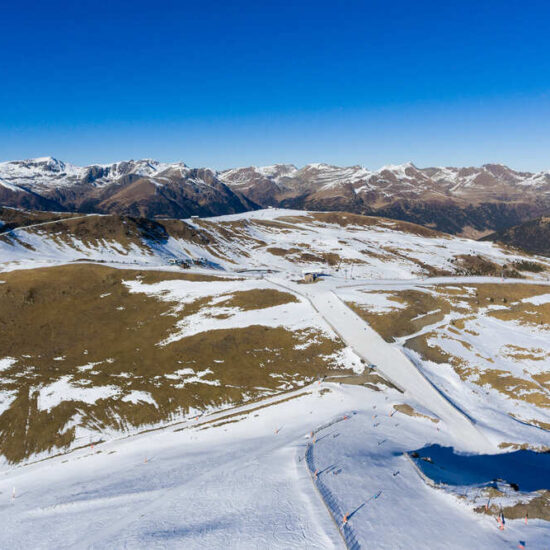
Climate change requires a different approach
The mountainous environment makes Andorra particularly attentive to natural hazards and climate change. Heavy snowfall, avalanches, intense rainfall, landslides, and heatwaves can affect infrastructure in different ways. Roads, buildings, electricity networks, and tourist facilities must therefore be designed or adapted with these constraints in mind.
In the longer term, snowfall levels are a particularly sensitive issue for ski resorts. Snowmaking equipment can mitigate some of the effects of a low-snow season, but it is not an unlimited solution. It requires water, energy, and temperatures that are sufficiently low.
Diversifying tourism activities and improving energy efficiency therefore appear as two complementary elements of the same adaptation strategy.
Population growth is putting infrastructure under pressure
Andorra’s appeal is also increasing demand for housing, mobility, and services. Population growth does not simply mean building more apartments. Every new neighbourhood also increases demand for water, energy, transport, schools, parking, and healthcare services. In a mountainous territory where buildable land is limited, maintaining this balance quickly becomes challenging.
Excessively rapid densification can lead to congestion and increase pressure on the housing market. Conversely, excessively restricting construction can make access to housing even more difficult for people who work in the country.
The quality of urban planning will therefore be decisive in the years ahead. The challenge will be to create additional housing and services while preserving the landscapes and quality of life that are themselves key elements of Andorra’s appeal.
Developing the country without erasing its identity
This is probably the main challenge facing Andorra’s infrastructure. Modernisation has improved accessibility, connectivity, and quality of life. However, every new construction project occupies scarce space in a mountainous environment that is one of the country’s greatest assets.
A wider road can improve traffic flow while consuming more land. A new residential development can meet housing demand while increasing the density of a valley. A modernised ski resort can strengthen the local economy while increasing demand for energy and water.
There is therefore no simple solution that can simultaneously maximise all objectives. The challenge is instead to strike a balance between economic development, residents’ needs, network capacity, and the preservation of the territory.
What could Andorra’s infrastructure look like tomorrow?
Andorra’s future is likely to depend less on spectacular projects than on its ability to better connect and optimise existing infrastructure. Public transport, real-time traffic management, building energy efficiency, local renewable energy production, digital administrative services, and adaptation to climate risks are among the areas that could gradually transform how the country operates.
Cooperation with France and Spain will also remain essential. Andorra is politically independent, but its physical and economic functioning is deeply connected to the territories that surround it. Energy, transport, telecommunications, healthcare, and economic exchanges necessarily extend beyond its borders.
This may be where the uniqueness of the Andorran model lies: seeking a degree of autonomy and modernity while embracing strong interdependence with its neighbours.