

Expatriation in Andorra, choosing to marry or enter a civil partnership
Expatriation in Andorra, choosing to marry or enter a civil partnership
More and more French people are considering settling in the Principality of Andorra because of its quality of life, advantageous tax system and security. Personal income tax does not exceed 10%, just like that of businesses. Foreigners wishing to invest in the country benefit from simplified procedures in their Andorran residence application. Andorra has a protected and healthy environment, conducive to wellbeing and health. As for its education system, it is possible to integrate children into French, Spanish and Andorran public schools. For couples wishing to settle there, what are the conditions for getting married in this small Principality nestled in the Pyrenees? Is it possible to opt for a civil partnership to formalise your union without getting married? How do you legalise cohabitation in Andorra? Civil partnership or marriage as an expatriate: which would be the better option?
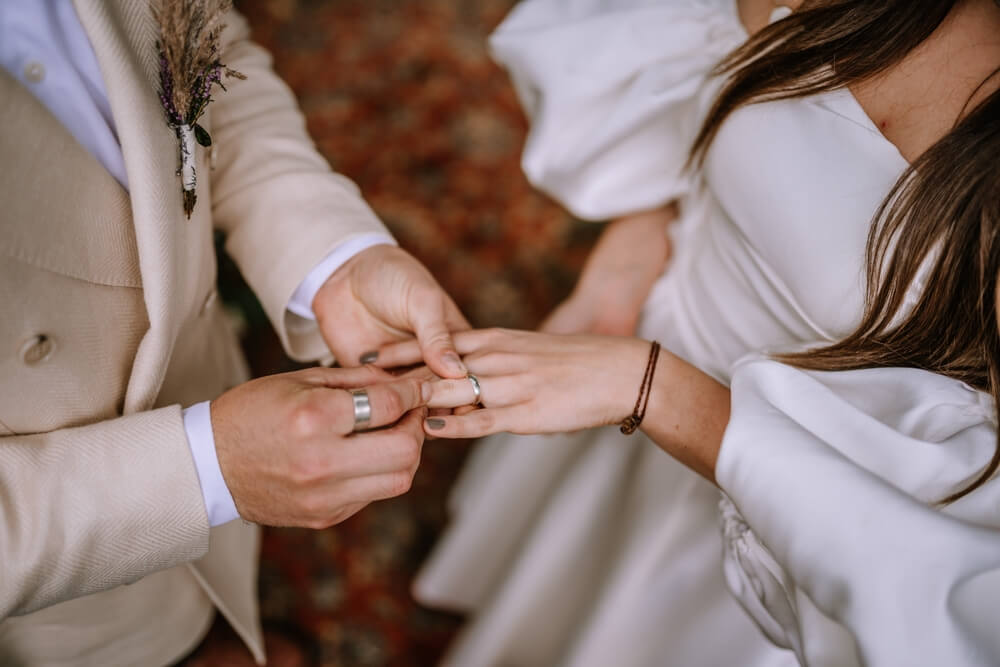
Marriage in Andorra In Andorra, couples can consolidate their union through civil marriage or canonical marriage. Each can freely choose the form of celebration they wish. These options are generally linked to conditions of separation by consent or divorce. !getting married
Legal conditions for getting married As an expatriate in Andorra, you have the right to enter into marriage if one of the couple holds Andorran residence. Each marriage must be recorded in the Andorran Civil Registry. The promise of marriage is recognised. However, it remains for the civil jurisdiction to determine its validity, existence and effects in the event of a break-up. Its proof must nevertheless be in writing. A widow, resident or expatriate, cannot remarry until 300 days after the death of her husband. A woman must also respect this same period before remarrying if she has had a marriage declared null or dissolved. All couples can freely choose to proceed with a civil or canonical marriage. However, they cannot combine both except on the sole condition of first entering into a civil marriage. Requirements for a civil marriage In order to enter into a civil marriage in Andorra, each partner:
Be single, separated or divorced,
Must not have a consanguinity link. Convicted persons who have committed murders or been accomplices to the murder of their previous spouse do not have the right to proceed with a civil marriage. Note that no civil marriage can take place without the consent of both parties. Only the consent of persons of sound mind (no mental health issues or inability to use reason correctly) can be validated.
Administrative steps for marriage in Andorra Various documents will be required for the celebration of a civil marriage. They must be submitted in person or through a notary to the Civil Registry. The two future spouses must provide:
A signed document attesting to their willingness to enter into marriage. It must mention their identity and the place of celebration of their union,
Their birth certificate,
Exigences pour un mariage civil
Proof of their civil status,
- Proof of their effective residence. In Andorra, every civil marriage must be preceded by the publication of banns by the Civil Registry. The marriage can then take place from the fifth day after the expiry of the publication period. If, after the six months following this period, the marriage has not yet been celebrated, it will need to be renewed. The marriage celebration will take place publicly at the communal house before the cònsol major (of the parish of residence or according to the choice of the future spouses) and in the presence of two witnesses. If one of the marriage parties presents a risk of imminent death, with evidence attested by a doctor, the marriage can be officialised by any cònsol. It will take place without any administrative formalities or publication of banns.
- Rights and duties of spouses Marriage in Andorra requires the same duties and grants the same rights to each spouse. Once married, the couple will have the obligation to:
- Live together,
Respect each other mutually (including fidelity and taking care of one another),
Assist each other materially and morally,
Raise and bring up children together,
Contribute together to family expenses according to the terms stipulated in the chosen matrimonial regime,
- And act constantly in the interest of the family. !duties of spouses
- Leur certificat de naissance,
- Un justificatif de leur état civil,
- Un justificatif de leur résidence effective.
En Andorre, tout mariage civil doit être précédé de la publication des bans par le Registre Civil. Ensuite, le mariage pourra avoir lieu à partir du cinquième jour après la date d'expiration du délai de cette publication. Si après les six mois suivant ce délai, le mariage n’a pas encore été célébré, il faudra la renouveler.
La célébration du mariage se fera de façon publique à la maison communale devant le cònsol major (de celui de la paroisse de résidence ou selon le choix des futurs époux) et en la présence de deux témoins.
Si l’un des contractants du mariage présente un risque de mort imminent, avec des preuves attestées d’un médecin, le mariage peut être officialisé par n’importe quel cònsol. Il se fera sans aucune formalité administrative ni de publication de bans.
Les droits et devoirs des époux
Le mariage en Andorre exige les mêmes devoirs et fait disposer des mêmes droits pour chacun des époux. Une fois marié, le couple aura l’obligation de :
- Vivre ensemble,
- Se respecter mutuellement (dont la fidélité et le fait de prendre soin de l’autre),
- S’assister matériellement et moralement,
- D’entretenir et d’élever ensemble les enfants,
- Contribuer ensemble aux dépenses de la famille suivant les modalités stipulées dans le régime matrimonial choisi,
- Et d’agir constamment dans l’intérêt de la famille.

Civil partnership in Andorra Andorra has an equivalent to the French PACS (civil solidarity pact). It consists more precisely of the officialisation of cohabitation. It allows you to formalise a union without being married.
This form of stable couple union contract was officialised on 23 March 2005. Conditions for entering a civil partnership in Andorra To have this possibility of entering a civil partnership, the couple must demonstrate that they maintain a stable relationship. The two partners must complete a file with the Civil Registry, which will be evaluated before being registered.
French expatriates and those of other nationalities will need to present their passport, a birth certificate and a civil status certificate. They will also need to provide a residence certificate issued by the immigration service. For single people, they will need to obtain the assistance of two witnesses.
Divorced people, for their part, will need to present the divorce decree. Widows will need to present the certificate of their previous marriage and the death certificate of their previous spouse. All documents can be presented in their original language and it is not necessary to translate them into Catalan.
However, they must be duly legalised. If the country of origin of both partners is part of the Hague Convention, the Hague apostille may suffice. On the other hand, if they come from other countries, you should ask their Ministry of Foreign Affairs which service is able to stamp these documents.
Pour les célibataires, ils devront se procurer de l’assistance de deux témoins. Les divorcés, quant à eux, devront présenter le procès-verbal du divorce. Les veufs devront présenter le certificat de leur précédent mariage et le certificat de décès de leur précédent conjoint.
Tous les documents peuvent être présentés dans leur langue d’origine et il n’est pas nécessaire de les traduire en catalan. Toutefois, ils devront être présentés dûment légalisés. Si le pays d’origine des deux partenaires fait partie de la Convention de La Haye, l’apostille de La Haye peut faire l’affaire. Par contre, s’ils viennent d’autres pays, il faudrait demander auprès de leur ministère des Affaires étrangères quel est le service disposé à apposer le cachet sur ces documents.