5 keys to understanding industry in Andorra today
5 keys to understanding industry in Andorra today When we think of the Andorran economy, industry is probably not the first sector that comes to mind. The Principality is much better known for its ski resorts, commerce, tourism and financial sector. This perception partly reflects reality.
Andorra is not an industrial power and its economy remains largely dominated by services. Yet reducing the country to tourism and commerce would overlook a whole set of production, processing and, above all, new high value-added businesses. The particularity of the Andorran model lies precisely in the size of the territory.
With a limited domestic market, mountainous terrain and the absence of large industrial infrastructure, Andorra can hardly reproduce the manufacturing model of its neighbours. It rather seeks to develop specialised activities, requiring little space and capable of leveraging its tax environment, digital infrastructure and proximity to France and Spain. To understand what industry in Andorra really encompasses today, we need to look beyond factories in the traditional sense.
A modest but real industrial history
The Andorran economy long relied on resources available in the Pyrenean valleys. Agriculture, livestock farming and forestry were essential activities for centuries. Tobacco also occupied a particular place in the country's economic history.
Ironworking is also part of Andorran heritage. Several forges operated on the territory in the modern era, taking advantage of local resources and know-how that formed part of a broader metallurgical activity across the Pyrenees. This traditional economy began to change profoundly in the 20th century.
From the 1950s and 1960s, improved communications with neighbouring countries accompanied the spectacular development of commerce and tourism. Winter sports gradually became one of the drivers of the economy, while the tertiary sector gained increasing importance. The Andorra we know today largely stems from this transformation.
Industry did not disappear for all that. It changed in nature and now occupies a secondary place relative to services. Geographical constraints make it difficult to establish activities requiring vast land, large volumes of raw materials or heavy logistics.
Companies capable of producing a lot of value with relatively little space, on the other hand, have a more favourable environment. This evolution explains why talking about Andorran industry requires some caution. Finance, tourism or commerce contribute to the country's economic dynamism, but they are not manufacturing industries.
They can nevertheless directly support industrial companies through financing, demand, logistics or access to new markets.
What does Andorran industry really look like?
We must forget the image of large industrial zones that can be found in France or Spain.
The Andorran economic fabric is much more compact and relies largely on small or medium-sized enterprises. Light processing activities find their place more naturally there.
Agri-food, tobacco, certain artisanal or specialised productions and technological activities correspond better to the territory's constraints than heavy industry. pharmaceutical industry Taxation is also an important component of the economic environment.

A company considering producing from Andorra must also take into account the cost of real estate, the availability of workers, the regulation applicable to its activity, customs formalities and the very small size of the domestic market. Andorra's situation outside the European Union is particularly important on this last point.
It gives the country a specific economic organisation, but also means that a company must not consider setting up in the Principality as equivalent to setting up in an EU member state. For an export-oriented activity, taxation is therefore only one piece of the puzzle.
La situation d'Andorre en dehors de l'Union européenne est particulièrement importante sur ce dernier point. Elle offre au pays une organisation économique spécifique, mais signifie aussi qu'une entreprise ne doit pas considérer une implantation en Principauté comme équivalente à une implantation dans un État membre de l'Union. Pour une activité exportatrice, la fiscalité n'est donc qu'une pièce du puzzle.
From traditional sectors to high value-added activities
The functioning of the Andorran economy creates strong interactions between commerce, tourism, services and local production. Tourism is a good example.
Visitors generate significant demand in hospitality and catering, but also for local products, construction, equipment, logistics and numerous services for professionals. Financial institutions play another role, even though it would be inaccurate to classify them among manufacturing industries.
Players such as Crèdit Andorrà or MoraBanc belong to the country's economic landscape and participate in financing its economy. The same applies to Andorra Telecom.
The operator does not constitute an industry in the manufacturing sense, but the digital infrastructure it provides has become essential for companies wishing to develop technological activities or work with foreign markets. This distinction is important for understanding the Andorran model: a large part of its potential does not lie in volume manufacturing, but in the ability to create an ecosystem favourable to specialised activities.
This notably explains the interest in digital technology, tech entrepreneurship and activities requiring more skills than physical resources.
Pharmacy, health and biotechnologies: a potential to consider with caution
Health, life sciences and biotechnologies are sometimes presented as diversification avenues for the Andorran economy. These activities do indeed have several characteristics compatible with a small territory. They can generate high value added, rely on highly specialised skills and require less space than traditional industry.
This does not mean, however, that Andorra already has a pharmaceutical industry comparable to that of major European hubs. To seriously assess the sector's potential, it is necessary to distinguish pharmaceutical distribution, healthcare activities, research, medical devices, food supplements and pharmaceutical production proper. Regulatory constraints and infrastructure needs are not the same.
Proximity to France and Spain can favour cross-border collaborations and access to skills. But for a pharmaceutical or biotech company, questions of authorisation, compliance, intellectual property, market access and regulatory recognition are decisive. In this field even more than elsewhere, tax attractiveness cannot be considered in isolation.
The potential exists mainly for targeted, high value-added activities. To speak of a genuine Andorran pharmaceutical or biotech hub, however, it would be necessary to rely on data precisely measuring the number of companies, investments, scientific jobs, research infrastructure and production carried out on the territory.
Le potentiel existe principalement pour des activités ciblées et à forte valeur ajoutée. Pour parler d'un véritable pôle pharmaceutique ou biotechnologique andorran, il faudrait cependant s'appuyer sur des données mesurant précisément le nombre d'entreprises, les investissements, les emplois scientifiques, les infrastructures de recherche et la production réalisée sur le territoire.
Digital technology, a more natural terrain for Andorra
If there is one field in which Andorra's geographical characteristics become less penalising, it is that of digital technologies. A company developing software, an online platform or a digital service does not need to ship tonnes of goods daily across the Pyrenees.
The quality of telecommunications then matters more than proximity to a port or an international motorway. Andorra has thus sought to strengthen its digital infrastructure and use the reduced size of its territory as an advantage.
In a country of this size, certain technological projects can be tested at a more easily manageable scale. Digitalisation also concerns the economy's historical sectors.
In tourism, booking tools, visitor flow management, digital payments and data analysis are now part of everyday life. In commerce, the development of e-commerce is gradually changing relations with a clientele that no longer necessarily limits itself to visitors physically present in the country.

This is probably one of the most coherent avenues given the characteristics of a mountainous micro-state.
Agri-food: producing less, but adding more value
Andorran agriculture cannot compete in volume with that of major European agricultural regions. Available area and terrain constraints naturally impose limits.
Its economic logic is thus different. Local productions can seek their value more in origin, know-how, quality and territorial identity.
Mountain products, meat, charcuterie, cheeses or altitude wines fit into this approach. Tourism constitutes a particularly interesting outlet here.
A product made locally is not just food. It can also become a way to discover the territory and its heritage.
This relationship between agriculture, processing and tourism allows more value to be created from relatively low volumes. It corresponds better to the country's constraints than a strategy based on intensive agricultural production.
Environmental issues are nevertheless gaining increasing importance. In a mountainous territory where exploitable spaces and resources are limited, water, soil and biodiversity management is directly part of economic reflection.
For producers, the challenge is therefore to preserve a profitable activity without losing what precisely constitutes the product's value: its link with the Andorran territory.
The main obstacles to industrial development
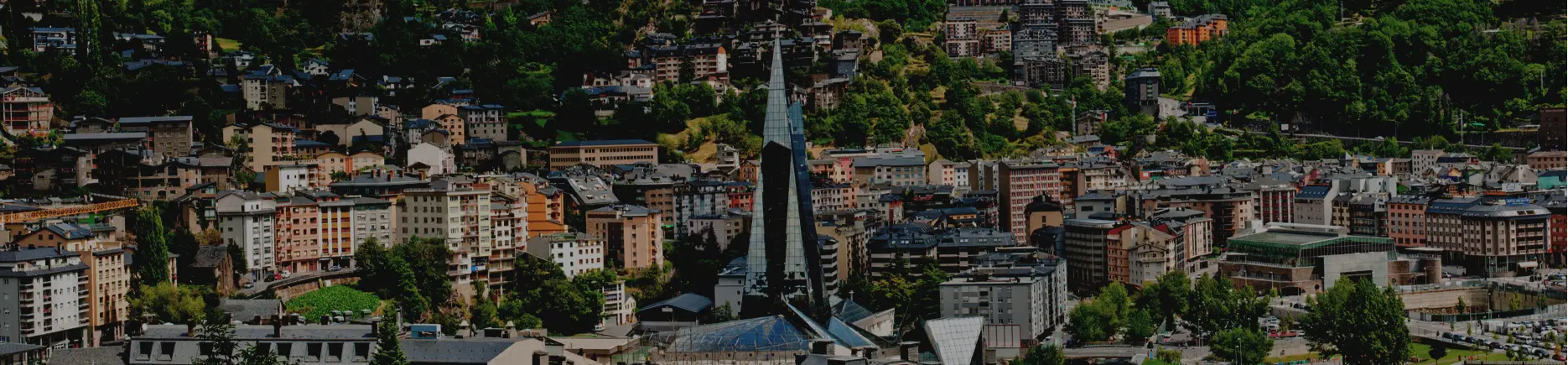
Geography remains the most obvious constraint. Andorra has no direct access to the sea and no railway network within its territory. Physical trade relies primarily on road links connecting the Principality with France and Spain. For a company whose business model depends on importing large quantities of raw materials and then exporting heavy products, this situation can quickly become a disadvantage.
The size of the labour market is another challenge. Companies looking for highly specialised profiles cannot always find them locally. International recruitment then becomes essential, bringing with it questions relating to residency, housing and the cost of living.
There is also the regulatory issue. A company wishing to sell its products abroad must have a precise understanding of the rules applicable to its goods and destination markets. These constraints also help explain why heavy industry has little reason to become a major driver of the Andorran economy.
The activities with the greatest potential are instead those that require few raw materials, limited transportation and relatively little space while generating high value per employee. Digital technology, certain technological services, applied research, specialised production and high-end food processing are more closely aligned with this profile.
What are the prospects for the coming years?
Andorra’s industrial future will most likely not involve building large factories. The territory has too little space and faces too many logistical constraints to compete directly with Europe’s major industrial regions on their own terms. Its potential lies elsewhere.
Andorra can seek to attract companies whose value primarily comes from technology, intellectual property, expertise or specialised production. The energy transition, digital technology, tourism-related technologies and certain research activities could therefore contribute to diversifying the economy.

This strategy will nevertheless have to be reconciled with several very concrete realities, including housing availability, labour requirements, energy capacity, environmental protection and the evolution of economic relations with the European Union. This is probably where the real challenge for the coming years lies.
Andorra will probably never become a major industrial country, and that is not necessarily its objective. Its small size could, however, allow it to specialise more quickly and experiment with models that would be difficult to implement on the scale of a large state.
For an entrepreneur or investor, it is therefore important to move beyond two caricatured views. Andorra is neither simply a tourist destination with no productive activity, nor an industrial El Dorado where low taxation alone would guarantee the success of a project.
It is an atypical market, with genuine advantages and equally real constraints. And it is precisely this combination that helps explain the nature of Andorran industry today: relatively modest in volume, but seeking growth through specialisation, digital technology, quality and high-value-added activities.